
FREE NOVEL MASTER CLASS WRITING RESOURCES
Updated: Jan 7

One of the things I’ve developed over the years, like a lot of writers who’ve been writing for some time, is the use of fiction and novel writing templates that help me keep everything well-organized when it comes to my characters, my settings, my important scenes, and so on. We figured because it's the holiday season, we'd post some free novel master class writing resources. There are a lot of templates out there that you can purchase, some online, some in Word documents, Google documents, Excel spreadsheets and so on, but I find free resources or templates you create for yourself based on your needs to be the best ones, especially since there really is no need to pay for something you don’t have to. At one point in time I was going to go down the path of making these templates look pretty and put them on the market to make a couple bucks. But I’ve changed my mind. So, below you’ll find links to free templates as well as some paid resources where you can go to do things like have your novel professionally edited (something I do as well—I’m a substantive editor, which means I’ll help you structure your novel, tell you what’s working, what’s not, etc. rather than fixing grammatical errors and proofreading), self-publish your novel/fiction if that’s what you care to do, provide links to other blog posts I’ve written that’ll answer some of your questions, and how you can sign up for my free weekly blog posts about how to write novels. So, without further ado, check out the below free and paid resources, download the templates I’ve provided (or make your own based on them), and get to writing!
Free Character Dossier or Character Development Template
The Character Dossier or Character Development template provides you with everything you need to keep your characters in order. The dossier is limitless, and has fields for things like your character names, what they look like, their nicknames, their race, their personality types, their heights, weight, eye color, their mannerisms, their parent’s names, the occupations, where they went to school, any history of theirs that may be important to your story, and pretty much anything you can think of so that you know exactly who your characters are, how they contribute to your novel, and how they affect other characters through their actions, and so on.
Get your free Character Development Template here and start building, with clarity, all of the people who will inhabit your fictional world!
WHERE CAN I FIND PLOT STRUCTURE GUIDES?
There are approximately seven plot structures in fiction that seem to be followed by writers, all of which, in my opinion, are some form of Freytag’s Pyramid. I’ve written about Freytag’s Pyramid and other structures in previous posts, so click on each link to learn more about each one of them. You never know which story structure will work best for you until you know them all.
Freytag’s Pyramid – Freytag’s Pyramid contains 7 elements. They are: Exposition, the Inciting Incident, Rising Action, the Climax, the Falling Action, the Resolution, and the Dénouement. Click the link above to get a more in-depth understanding of this plot structure.

Joseph Campbell’s The Hero’s Journey – Joseph Campbell is a god when it comes to literature and how drama plays out. In The Hero with a Thousand Faces, Campbell describes the narrative pattern as that of the monomyth, a story structure recurrent in mythology from around the world: “A hero ventures forth from the world of common day into a region of supernatural wonder: fabulous forces are there encountered and a decisive victory is won: the hero comes back from this mysterious adventure with the power to bestow boons on his fellow man.” I have written a post specifically on Campbell’s The Hero’s Journey, which you can read by clicking on the link.

Save the Cat Beat Sheet – Blake Snyder’s 15 steps for the Save The Cat Beat Sheet structure is geared more towards screenwriting, as he was a screenwriter. It ascribes percentages to each part of the action in terms of where in the drama we are located. For example, the opening image would be 1%, the setup would be 1% - 10%, and so on. Click on the title link or the link above for an entire blog post devoted to the Save the Cat Beat Sheet structure of drama.

Here are the 8 Steps of Dan Harmon’s Story Cycle:
A character finds herself in a zone of comfort. Her life is boring and not much is going on.
But she wants something. Her desire for something causes her to take action.
She enters an unfamiliar situation. The character crosses the threshold to pursue what they want.
She adapts to the new situation.
She gets what she wants, but getting what she wants comes at a cost.
Now that she has what she wants, she pays a heavy price for getting it. New challenges present themselves to her.
She returns to where she started out in the beginning of her story.
She’s changed, and she has grown in some form or fashion.

John Gardner’s The Fichtean Curve throws readers right into the story. The steps include:
Inciting Incident gets the reader thrust right into the action. It’s what kicks off the conflict
Rising Action (which is just a series of hurdles or crises the protagonist must face)
The Climax (this is where we, well, reach the climax or the peak of the drama or tension)
The Falling Action and Resolution are where things have changed for our hero, and all the loose ends are nicely wrapped up in a bow to the reader’s satisfaction. Although that isn’t always the case, of course.
Two-thirds of the story or novel will be in the rising action section of our novel. During that time, there will be one crisis after another, which are the plot points (this happened, and so this happened because of it, etc. Then we hit the climax of the story, when our hero is faced with her ultimate challenge, which gives her the most trouble.

Three Act Structure – The three act structure:
Act 1: Exposition, Inciting Incident, Plot Point One
Act 2: Rising Action, Midpoint, Plot Point Two
Act 3: Pre-Climax, Climax, Dénouement

The 7-Point Story Structure - In 2013, at the Life, the Universe, & Everything conference, Dan Wells, a sci-fi author, introduced the seven-point story structure. The basic structure is in line with all of the rest of the rest of the structures, which I believe stem from Campbell’s Hero’s Journey, but, like the others, with slight differences, either with more detail or less detail.

WHERE CAN I GET NOVEL CRITIQUE AND EDITING SERVICES?
You can come to me! I’m a substantive editor, which means I would provide the following:
Big-Picture Content: Enhances the manuscript's core ideas, themes, and arguments.
Structure & Organization: Reorganizes chapters, sections, or paragraphs for better flow and pacing.
Narrative Elements (Fiction): Works on plot, character development, setting, and dialogue.
Clarity & Coherence: Ensures the message is clear, logical, and effectively communicated.
Audience Connection: Makes sure the content is suitable and engaging for the target readers.
There are other ways to get novel critiques, constructive criticism and feedback, and I’d recommend joining writing groups, depending on your skill level. As I’ve been writing for decades and have multiple degrees in writing, literature, and creative writing, I have been going to workshops for years. Now that I have the skills and confidence to write (I have 9 novels at varying stages of the writing and editing process), I only go to one writing conference a year, which is a small group of award-winning novelists and a generous professor of creative writing at a university participating. We hold it in Taos, New Mexico every year, and every year we bring a novel. That’s not your typical conference situation—most only have portions of novels or, more likely, work on the craft elements and the short stories brought to the conference by participants.
For editing services, the same sites/companies listed under the book cover design section directly below this section like Reedsy and Upwork are excellent choices, as they’ll have proofreaders and copy editors and editorial assessment professional. But don’t forget—you’re an editor too. Check out our post on self-editing your novel so that you’re not wasting time paying others to do what you can do yourself.
I’d love to help get your novel in shape, so shoot me an email and we can discuss your project. The consultation is free! Cully@novelmasterclass.com
WHERE CAN I GET HELP WITH BOOK COVER DESIGN?
There are probably ten times as many if not more book cover designers than there are writers, because if you know how to use software like Canva or Figma, Adobe Creative Cloud or InDesign or Photoshop or one of a thousand other tools designers use, you can be a designer. That said, just like any profession, there are good designers and subpar designers and designers somewhere in between. If you’ve ever needed something designed—a flyer, a poster, a website, I bet someone you know mentioned they were a designer or at least knew one they could hook you up with. You can go that route, but make sure you do your research. If someone is recommended to you, ask for their portfolio. If they don’t have a portfolio, that’s probably not a good sign.
There are other ways to get novel critiques, constructive criticism and feedback, and I’d recommend joining writing groups, depending on your skill level.
Here are other places you can get help with book cover designs are freelancer sites:
fiverr. fiverr connects freelancers to people or businesses looking for services.
Reedsy is another blog that provides book cover design resources and other freelance resources as well as content geared towards writing books.
Canva is more of a DIY creative site, but if you’re looking to save money and learn how to create a book cover on your own, Canva is the place for you.
IngramSpark is sort of the end all be all of self-publishing print and Ebooks, the publishing process, and distribution of your novel. It’s also a great place to learn about creating the right types of professional-looking book covers.
Upwork allows you to post a job and then have AI match you with the right book designers. Choose who you’d like to work with and then you’ll deal with the designer directly. It’s a good place to consider, especially if you’re on a tight budget as it has plenty of affordable designers from other countries as well.
Glastonbury Publications advertises itself as a Christian publishing company, but I didn’t see much on that front. They do, however, provide all your publishing needs as well as audio books.
Adobe, which is a behemoth when it comes to design software for consumers and business alike, allows you to create your book design cover for free. There’s lots of information there to guide you through the process, and I used it when I was in the advertising world, so I know it’s powerful software. And the learning curve isn’t huge either.
There’s also KDP, or Kindle Direct Publishing from Amazon. I’ve used it in the past just to learn how it works, and it’s pretty self-explanatory. They break down the entire process step-by-step and it has videos you can watch to guide you through the process.

WHAT NOVEL WRITING SOFTWARE SHOULD I USE?
This one is a tough one because there’s a divide for many on which software to use based on the writer’s age as well as a writer’s familiarity with technology. I know writers who write by hand and have other people type the novel up for them on a computer. I know other writers who’ve been on MS Word since it came out, or not long afterwards, and have stuck with it. I’m one of those people, though since the Dictate feature of Word was introduced I have written a novel and then read it to Word, and it typed it up for me. There were some errors, but nothing major, and it saved me a LOT of time. Gotta love the speech-to-text world. Here are a few examples of novel writing software out there, some of which aren’t necessarily geared strictly toward writing fiction.
Software | Cost | Use |
$59.99 one-time fee 30-day free trial | Scrivener combines all of the tools you’ll need to write your first draft. Scrivener is the go-to app for writers of all kinds, used every day by best-selling novelists, screenwriters, non-fiction writers, students, academics, lawyers, journalists, translators | |
LivingWriter | Subscription plans starting around $10-$15/month for monthly or annual payments, with an annual plan providing a discount (e.g., $144/year or $12/month), plus options for a lifetime purchase (around $399-$699) and a 14-day free trial | Start your book, plot your book, write your book, organize your book, and export it for publishing all in one place. |
ProWritingAid | Free plan with a 500-word limit, while its paid Premium plans (unlimited features) cost around $30/month, $120/year (about $10/month), or a one-time $400 for a Lifetime deal | ProWritingAid is an assistant specifically to help you tell better creative and business stories and share your ideas with the world. |
Plottr | Plottr - $60/yr, $150 Life Plottr Pro - $9.99/mo, $99/yr, $599/Life Plottr Pro+ Community - $14.99/Mo, $129/yr, $649 Life | Fix plot holes, sagging middles, and go from an idea to an outline quickly. |
Sudowrite | $29/mo or $264/yr Free trial | Fiction Writing Made Easier — AI built for fiction writers — brainstorm, draft, and enrich every story. Sudowrite helps you write novels faster, without losing your unique voice. Write a Novel in a Week. Overcome Writer's Block |
Free web-app $19.99 for the desktop app | Hemingway App makes your writing concise and correct. The app highlights lengthy, complex sentences and common errors; if you see a yellow sentence, shorten or split it. | |
Evernote | Free tier, a Starter plan (around $100/year for limited notes/devices), and an Advanced plan (around $250/year for unlimited everything, plus AI features | Evernote's note taking app helps you capture and prioritize ideas, projects and to-do lists, so nothing falls through the cracks. Start your free trial today! |
Free plan $69.99/yr for Microsoft 365 Personal | Use Microsoft Word for online document editing with AI-powered suggestions from Copilot for grammar, style, and clarity. Write, edit, and collaborate . | |
Google Docs | Free | Create online documents and edit PDFs with Google Docs. Collaborate in real-time from any device and use AI to generate drafts, templates, and more. |
Ulysses | $5.99/mo or $39.99/yr 7-day free trial | The Ultimate Writing App for Mac, iPad and iPhone. Powerful features and a pleasant, focused writing experience combined in one tool |
Free to download and try $199.99 to export ebooks only or $249.99 for ebooks and print | Vellum specializes in the creation of Ebooks. They’re only available for Mac, but if you’re an Apple author, Vellum may be right up your alley. Per Vellum: Create ebooks for every platform: Kindle, Kobo, Apple Books, and more. Each specialized file can guide readers to buy your next book in their favorite store. |
Scrivener - Scrivener combines all the tools you’ll need to write your first draft. Scrivener is the go-to app for writers of all kinds, used every day by best-selling novelists, screenwriters, non-fiction writers, students, academics, lawyers, journalists, translators and more.
LivingWriter - Start your book, plot your book, write your book, organize yourbook, and export it for publishing all in one place.
Squibler - Create novels by chatting with AI to brainstorm, outline, and visualize your story.
ProWritingAid - ProWritingAid helps you craft, polish, and elevate your writing.
Plottr - No more sagging middle. Be gone plot holes. Give that character a satisfying arc. Fiction visualized!
Sudowrite - Try the AI writing tool with unparalleled story smarts. Sudowrite is the non-judgmental AI writing partner you always wanted.
Hemingway Editor - The app highlights lengthy, complex sentences and common errors; if you see a yellow sentence, shorten or split it. If you see a red highlight, your sentence is so dense and complicated that your readers will get lost trying to follow its meandering, convoluted logic—try editing this sentence to remove the red highlight.
Evernote - Remember everything and tackle any project with your notes, tasks, and schedule all in one place.
Microsoft Word - Sign in or sign up for free to start using Word for the web right away, no installation or purchase required.
Google Docs - AI-powered documents to help you and your team create and collaborate on content.
Ulysses - Powerful features and a pleasant, focused writing experience combined in one tool, made for people who love to write and write a lot — this is Ulysses
Autocrit - Write better stories, slash revision time in half, and keep a finger on the pulse of what's actually working in publishing today. Unlimited professional tools to plan, write and polish – with cutting edge feedback that gets your manuscript ready to take on the world.
Bookbaby - From editing and design to printing, distribution, and marketing, our experts help you through every step of the process.
WHERE CAN I GET HELP WITH MARKETING MY NOVEL?
Ah, marketing! Book marketing can be the bane of a writer’s existence. Long gone are the days when you got published by a press and they took care of all of the marketing. It just doesn’t happen the way it used to, unless you’re a Stephen King, a John Grisham, or a Colleen Hoover. Things just ain’t the same. These days, even if you’re a known writer, there’s a great chance you’re going to have to do a lot if not all the marketing yourself, especially if you’re self-published and/or don’t want to pay someone else to market your book for you. Here’s a list of book marketing books, as well as some links to book marketing help.
How to Market a Book: Overperform in a Crowded Market by Ricardo Fayet
The Best Book on How to Write, Publish and Market Your Novel into a Bestseller by Zackary Richards
How to Market Your Book on Amazon: Real Advice from Someone Who's Doing it Well: Work from Home Series: Book 11 by Sam Kerns
Romance Your Plan: Taking Genre Fiction Marketing to the Next Level (Publishing How To Book 2) by Zoe York
How to Write, Publish, and Market your Novel: a Brief No-Nonsense Guide by Cody C. Engdahl
IngramSpark’s How to Market a book
Marketing Your New Book: A Guide for New Authors by Literature and Latte
Book Launchers – This is a video by Book Launchers That Provides Tips and Tricks without using Social Media on How to Market Your Book
Forbes Even Has a List of Simple Steps Called How to Market a Book in 10 Simple Steps
Long gone are the days when you got published by a press and they took care of all of the marketing. It just doesn’t happen the way it used to, unless you’re a Stephen King, a John Grisham, or a Colleen Hoover
WHERE CAN I BUY NOVEL WRITING JOURNALS, PLANNERS, AND OTHER WRITING TOOLS THAT WILL HELP ME WITH MY WRITING?
You can buy novel writing journals, planners, pens, typewriters, writing software (see above section) and everything and anything else pretty much anywhere you buy anything. I hate to admit it, but I get pretty much everything on Amazon because 1) I’m a writer and don’t like going shopping where there’s hundreds of people milling about, and 2) Amazon delivers everything right to my door often within a day or two. That said, here’s a list of writing implements and just cool writing stuff, some of which I use and some of which has been gifted to me over the years.
Royal Consumer Information Products Classic Retro Manual Typewriter (Black), Model Number: 79104P


HOW DO I SUBSCRIBE TO A NOVEL WRITING NEWSLETTER?
Well, you’re in luck! If you sign up to NovelMasterClass.blog’s weekly blog post/newsletter, you’ll get a post straight to your email inbox once a week (sometimes twice a week, depending on if I have something more to say). You can sign up below or above just by entering your email address. Novel Master Class does not send SPAM. Once a week you’ll simply get an email with that week’s blog post that will provide you with writing insight, novel writing tips and tricks, literary content like book reviews, interviews with authors, an occasional literary podcast, book recommendations, and more. Sign up below, but feel free to explore the more than 200 literary blog posts currently up on NovelMasterClass.blog/blog.
I hope the resources I’ve provided here are helpful. Feel free to sign up and comment on this post if you have other resources you’d like to see or, if you have any you’d like to share, I’m sure you’ll make a superstar out of yourself for being so kind as to share them with the rest of us writers. We’re all on the same team. Thanks!
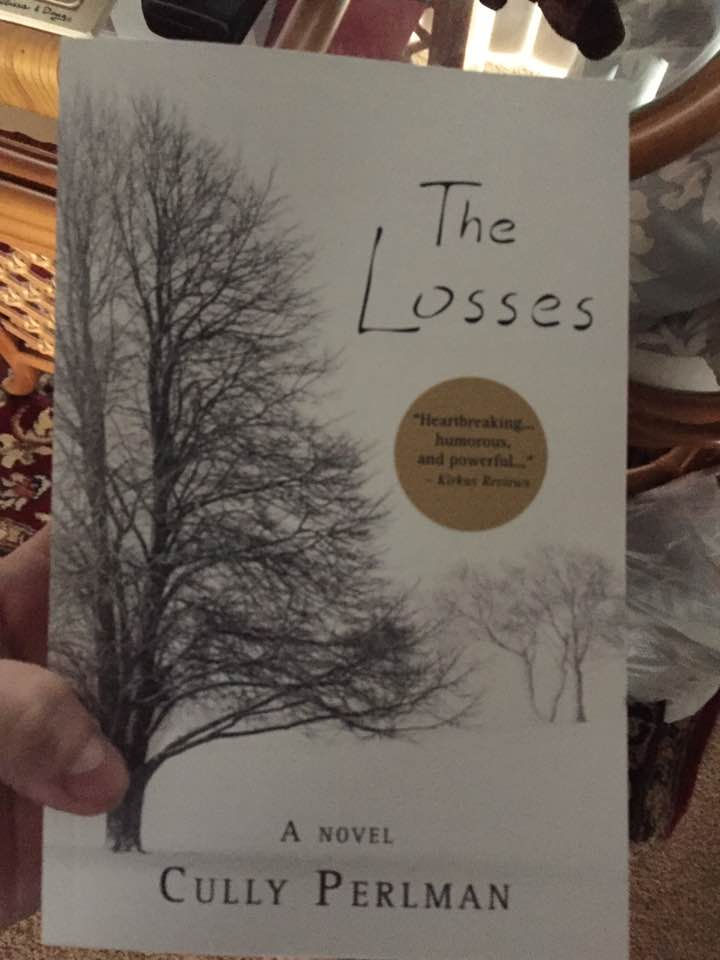
Cully Perlman is author of a novel, THE LOSSES.
Cully can be reached at Cully@novelmasterclass.com
*Novel Master Class may receive nominal commissions from affiliate links. These commissions will be used to pay for hosting and other fees so that this blog remains free to you, our readers.


Thanks. Very thorough.