
THE 10 BEST NOVELS I’VE EVER READ

Not really. I’ve got about 20 or more, but I’ll stick to the 10 best novels I’ve ever read so you don’t have to see that little “60 min read” nonsense at the top of the blog post.
THE 10 BEST NOVELS I’VE EVER READ
CRIME AND PUNISHMENT by Fyodor Dostoevsky

Raskolnikov. If you’ve ever read Dostoevsky’s book, you immediately know who I’m talking about. Crime and Punishment is about a poor, ex-law student in St. Petersburg, Russia, plans to kill an old pawnbroker who keeps her money and valuables in her apartment. Since the moment I read the novel, it’s been one of the novels I’ve called my favorite novel whenever anyone asks me that difficult question: What’s your favorite novel.
I think Crime, or the idea (loosely) behind it, is something that crosses some of our minds (or rather the minds of sociopaths and historical figures who maybe found themselves in existential crises due to their circumstances: how far will I go in order to achieve the greatness in my life I know I can create if only I was given the opportunity?). Raskolnikov actually goes through with it, only his isn’t getting an education or working, his line goes way past that of simply putting in the work.
The hero of Dostoevsky’s novel is driven mad, not only by his actions but by the guilt created by those around him. It creates a representation of the realities of Russian life during the period of Dostoevsky’s life. Philosopher and Orthodox theologian Nikolay Berdyaev, like others, took the novel to be an “illustration of the modern age’s hubristic self-deification or . . . ‘the suicide of man by self-affirmation.’”
Like a fishhook caught in my cheek, I couldn’t put Crime down. There’s this pressure from the outside world, this fear of being caught that Raskolnikov, like a kid with chocolate on his lips, cannot shake. The novel has a bunch of critical scenes that point to the end of Raskolnikov’s getting away with having axed Alyona Ivanovna to death. Those moments raise our blood temperatures, but there’s much more meaning to what’s going on in the novel other than the story of Raskolnikov and his vile actions. If you haven’t read the book, or anything else by Fyodor Dostoevsky, I highly recommend it. Like a great many books from other periods, it may take a few pages to get into, but you won’t be disappointed once you’re in. I surely wasn’t.
Here’s a video titled “Why should you read ‘Crime and Punishment”? by Alex Gendler: https://youtu.be/Vtkv3-endYc?si=EM85GEpQH-cEO_xY
BELOVED by Toni Morrison

Winner of the 1988 Pulitzer Prize, Beloved tackles the issue of the psychological remnants of slavery and the interior lives of the previously enslaved. It explores the damage slavery has caused, the trauma of slavery and how it affects the construct(s) of communities of ex-slaves, and (through an evil ghost) how Sethe, a mother of four and former slave, struggles with the past in her Cincinnati home.
The novel is based on the life of Margaret Garner, a slave who killed her daughter rather than submit her to the horrors of slavery. Garner and her family were caught after trying to escape from their owner, Archibald Gaines. Garner managed to kill her youngest daughter, Mary, and it was later viewed as a dilemma when her trial arrived: should Garner be charged with murder or destruction of property? There are some books with heft and content beyond what I find typical, and this is one of those books.
Beside trauma and the interiority of former slaves, themes of what it means to be a man, identity, the loss of the true self, complicated familial relationships, murder, the ghosts of the past, and probably dozens more themes hidden within the text, are done so well by Morrison that it’s difficult to capture them all in one reading. So, I read the novel as a twenty-something, and I try to read it as often as I can, not only as a writer seeking to understand the how of how Morrison creates such powerful literature but the psychological places she has to go to translate extreme and complicated subject matter into a story her readers can enter without becoming too uncomfortable to read it.
Morrison, after accepting the Frederic G. Melcher Book Award, said this: “[t]here is no suitable memorial or plaque or wreath or wall or park or skyscraper lobby" honoring the memory of the human beings forced into slavery and brought to the United States. There's no small bench by the road. And because such a place doesn't exist (that I know of), the book had to.” And let me yell from the mountain tops, it absolutely does just that.
Here’s an interview with Toni Morrison about Beloved: https://youtu.be/C-SGXvk_bak?si=vbzRZtrUmT3DTccC
FOR WHOM the BELL TOLLS by Ernest Hemingway

Hemingway, from my experience, is like jackfruit: you either enjoy his work, or you hate it. Me? I can read Hemingway every day all day of the year, doesn’t matter if it’s his short stories, his reporting, or, obviously, his excellent novels. We all know by now how Hemingway changed how people wrote, moving writing away from the ornate Victorian fluff (I mean verbosity, verbosity!) to a lean, direct style showing emotion rather than telling the reader about it (sound familiar?). My favorite works of his, though, are his Nick Adams short stories, in particular The Complete Short Stories of Ernest Hemingway: The Finca Vigia Edition, and his novel about Robert Jordan, attached to antifascist guerillas in the mountains of Spain during the Spanish Civil War, which took place from 1936 until 1939.
If you know anything about Hemingway, or are a fanboy like me (I lived in Spain as a kid and later as an adult, attending bullfights (corridas, or “corridas de toros”) with toreros such as El Fandi (David Fandila), José Tomás, Morante de la Puebla, and Julián López Escobar, aka, El Juli), and have traveled to Hemingway’s house in Key West as well as other Hemingway haunts around the U.S. and Spain, you can’t help but be fascinated by his life. And, however cliché or out-of-date, his masculinity and the injuries he sustained while in pursuit of the adventures he sought.
For Whom the Bell Tolls as well as A Farewell to Arms are, in my opinion, his best novels. While you don’t have to speak Spanish (in particular Castilian Spanish), the nuances and phrases, as well as a basic understanding of Spaniards in general, certainly helps you understand what, exactly, is going on. But Hemingway’s prose, as mentioned above, is simply magnificent. Here’s the opening of the novel:
“He lay flat on the brown, pine-needled floor of the forest, his chin on his folded arms, and high overhead the wind blew in the tops of the trees. The mountainside sloped gently where he lay; but below it was steep and he could see the dark of the oiled road winding through the pass.”
It’s a visual opening, and Hemingway does that often in his works, setting up, well, the setting. Here’s the opening to A Farewell to Arms:
“In the late summer of that year we lived in a house in a village that looked across the river and the plain to the mountains. In the bed of the river there were pebbles and boulders, dry and white in the sun, and the water was clear and swiftly moving and blue in the channels.”
And then, maybe a paragraph in, Hemingway starts his story. His novels start in medias res, or “in the middle of things,” and as readers we’re immediately drawn in. And that’s exactly what happens with For Whom the Bell Tolls.
In short, the novel is a love story between Robert Jordan and Maria, whose parents have been killed by the Falangists (a group of people who follow a political ideology with an emphasis on the Catholic religious identity of Spain, but also believe the state should “have the supreme authority over the nation.” – Wikipedia. Maria, as an aside, is also raped by the Falangists. I won’t give any spoilers, but as John Donne (whom Hemingway took the title from) says, “. . . for whom the bell tolls; it tolls for thee.” And if I were you, I’d listen.
You may have to sign up to read Hemingway’s interview about the novel, but it’s worth it: https://www.newyorker.com/magazine/1940/12/28/author-in-the-forenoon
LEGEND of a SUICIDE by David Vann

While not necessarily a novel (it’s a story cycle, which is a collection of stories linked by characters or settings or themes, etc.), Vann’s Legend is one of those books you strive, as a writer, to write. Most of Vann’s writings deal with the suicide of his father. The structure of Legend is one novella and five short stories, though the British version makes the collection a novel, which may or may not deliver the same power the American version does. All of Vann’s stories in the book are set in Alaska. And all of them are so well-written, so emotionally impactful, they hurt as a writer to read. Vann’s writing makes you want to give up, because you know you’ll never achieve what Vann achieves in Suicide (or any of his other works, for that matter).
As any writer knows, we often try to write what we know or at least learn what we don’t know in order to achieve that goal. Vann writes about what he knows. Literally. Vann was 13 when his father, James, committed suicide or “unalived himself” in modern parlance, which is apparently to avoid content moderation on the internet. Anyway, Vann wrote Legend from the of 19 to 29. Spoiler Alert: though Vann is writing about his father’s suicide, an event which was confusing and a tragedy those in his family couldn’t agree upon about in terms of facts (according to an interview with “The White Review,” it’s the son who actually commits the suicide (as in, if one wants to read, and logically so, as Vann himself). Also, some advice to writers from the same interview: “I think it’s very important for any writer – you have to not care about what people think. Although I’m really writing for myself, I do think of the reader with the pacing. Something significant has to happen every three pages, some dramatic moment between characters or some point of conflict. It’s a weird blend where I don’t actually imagine another reader and I’m fine with writing whatever I want to write.” And against the beautiful and dangerous background of Alaska, Vann creates a piece of literature that holds onto you and pokes you and drives you to the point of tears you weren’t expecting when you picked up the book.
David Vann interview about Legend of a Suicide: https://youtu.be/PIui3bP_eww?si=eHYD1yZgZIRu-PZj
LESS by Andrew Sean Greer

Less, for me, was one of the greatest reading surprises I’ve ever experienced. I knew absolutely nothing about the novel until I did a search for Pulitzer Prize-winning novels. Less, unlike most novels I’m attracted to (literary fiction, if you haven’t caught on by now), is a satirical piece of fiction. A sequel was published in 2022, but I haven’t picked that on up yet. I’m afraid it won’t compare to the original.
Anyway, the novel is about a gay man named Arthur Less. Arthur is a writer. His claim to fame, however, is that his ex-boyfriend, Robert, is a Pulitzer Prize-winning poet. Arthur had some success with his first novel, but things, over the years, he’s lost his importance or fame or whatever you want to call it. But then, Arthur, about to hit 50, receives an invitation to the wedding of another one of his ex’s. Which is when the real meat of the novel begins.
Arthur goes on a whirlwind journey to avoid the wedding. Over the course of the novel, Arthur travels abroad, hitting one literary event after another, and suddenly finds himself relevant again. And the shenanigans ensue. I loved the novel because while it’s funny and distinct, it’s one of those stories we can relate to, because Greer takes the universal feelings of rejection and triumph and makes them specific to Arthur. And the novel is just damned fun.
If you’re interested in listening to Greer read a passage from Less, here you go: https://youtu.be/SXcBRobXIyA?si=tB5rOaHETSbmPgxt
A LITTLE LIFE by Hanya Yanagihara

So, Yanagihara’s novel is a controversial one, at least among the writers and readers I know. The novel is about four college friends, Jude, Willem, JB, and Malcolm, and their journey to adulthood after graduating from college. A Little Life was a bestseller and was shortlisted for the 2015 Booker Prize, and the National Book Awards, won the Kirkus Prize, and is a whopper of a book at 832 pages. (When I picked the tome up, my first thought was, “This better be a damn good book!” and it was).
Yanagihara’s novel follows Jude St. Francis, who’s disabled, a lawyer, and just a mysterious guy all around. The rest of the characters hover around Jude and his disability and the immense traumas from his childhood. Yanagihara is an expert at slicing and dicing the themes of suicide and especially self-harm, to the point that I had a visceral reaction to certain scenes that I could not push away without feeling like I was abandoning Jude when he needed someone’s attention most. And this is what a lot of the novel is about.
Here’s a great interview with Hanya Yanagihara about A Little Life: https://youtu.be/jX0Rl-HWpX8?si=A0nv6LX32VX5j3bE
THE UNBEARABLE LIGHTNESS OF BEING by Milan Kundera

Kundera was a Czechoslovakian writer who went into exile (he was expelled from the Communist party, took part in the Fourth Congress of the Czech Writers Union in 1967, and remained focused on reforming Czechoslovak Communism. After the Prague Spring, and after his books were banned by the Czech Government, Kundera visited France, moving there in 1975. I learned all this after I was introduced to The Unbearable Lightness of Being while learning to teach English as a foreign language over a month in the heart of Prague (I stayed, humorously enough, at a place called the Hotel Dum, which me and my fellow TEFLers pronounced as “doom”).
The Unbearable Lightness of Being tells the story of two couples and difficult relationships where choices remain permanent during the Prague Spring.
Kundera, as far as I could tell, was like a smazeny syr (a crispy, deep-fried cheese coated in flour and an excellent, end-of-night drunk treat) or a pivo, which translates to “beer” (the beer in Prague is ridiculously good and absurdly inexpensive)—you had to dive in the first night you got there.
Here’s an interview with Kundera in the Paris Review: https://www.theparisreview.org/interviews/2977/the-art-of-fiction-no-81-milan-kundera
ON the ROAD by Jack Kerouac

If there’s one novel that got me writing and traveling across the United States, On the Road is it. Like many youngsters who ate up Road when it came out in September of 1957, I sold my shit, got in a friend’s car, and hit the highways and byways of the United States of America. While headed to Yellowstone National Park, where I worked a season (or almost a season, as I just had to get back on the road), I started writing my first novel, a mimic of Kerouac’s novel. I remember the title: Two Down Beats. (Transparency alert: I wasn’t sure whether to italicize the title, because while it’s a book, it’s not a book, if you catch my drift. It’s a practice novel, my first, with all the horrific writing that that implies).
Like many of the important novels in my life, I know the first few lines well: “I first met Dean not long after my wife and I split up. I had just gotten over a serious illness that I won’t bother to talk about, except that it had something to do with the miserably weary split-up and my feeling that everything was dead. With the coming of Dean Moriarty began the part of my life you could call my life on the road.”
Notice the musicality and speed of those lines, because that’s how the style of the novel goes: fast, fast, fast. His book’s exciting. Kerouac wrote the novel over three weeks, high on Benzedrine and coffee, typing nonstop onto a 120-foot scroll of paper he’d taped together. The novel was influenced by the style of jazz musicians like Charlie Parker and others, and upon publication, six years after he wrote it (he revised for those six years), Kerouac became literary royalty. The NYT called it “the most important utterance of the “beat” generation, and Kerouac became the “leader” of that generation. Kerouac told a biographer one time: "I'm Catholic and I can't commit suicide, but I plan to drink myself to death." And that’s pretty much what he did.
Here’s a video of him on an episode of William F. Buckley’s “Firing Line,” puffing on a cigar and where Kerouac’s alcoholism and personality is on full display: https://youtu.be/oaBnIzY3R00?si=y9mGMQQ-JIF9UuOY
THE CALL of the WILD by Jack London

When I graduated from Georgia State with an MA in literature in English, I jumped in a car with an ex-girlfriend and moved to California, specifically the area right around Silicon Valley. I shouldn’t have, but I did, and I’m glad I did, because besides getting shit-faced in Sonoma, eating great Vietnamese food at this little place in Sunnyvale or Mountain View or some other little cool town, and being offered a job at Santa Clara University (which I turned down and subsequently moved to Spain after a month in Prague), I got to visit Wolf House, London’s 26-room mansion in Glen Ellen. The place burned down before London and his wife moved in, and the stone remnants of the place remain under the shade of trees in what is now Jack London State Historic Park. But I digress. Back to The Call of the Wild.
London’s novel is set in Yukon, Canada, during the Klondike Gold Rush in the 1890s. And it's about a St. Bernard shepherd mix that's stolen from its owner to become a sled dog. But the hero of the novel is actually Buck, the St. Bernard, and his journey to the things life throws his way.
Here’s a video entitled “Jack London on How to Become a Bestselling Writer” that InkwellMedia put out. https://youtu.be/9k5kZovE09g?si=WfckxnmVAMH3glf-
THE PROPHET by Khalil Gibran

Khalil Gibran’s The Prophet is one of these books that you can read in one sitting (it’s only 128 pages) and still never forget. Now, Prophet isn’t a novel. I don’t care. His book’s a collection of poetic essays divided into eight chapters. To tell you how interesting and captivating I found the book, I read it straight through while sitting on a bed whilst I was working a season in Yellowstone National Park. I was 23. But that’s not the best part. The best part? I did it while a party of drunken and high park workers were jamming to music in my room at the time.
Here’s a supposed interview with Gibran titled “Gibran: 'How and Why I wrote The Prophet' - a rare interview discovered,” which can be found here: https://www.kahlilgibran.com/latest/103-gibran-how-and-why-i-wrote-the-prophet-a-rare-interview-discovered.html
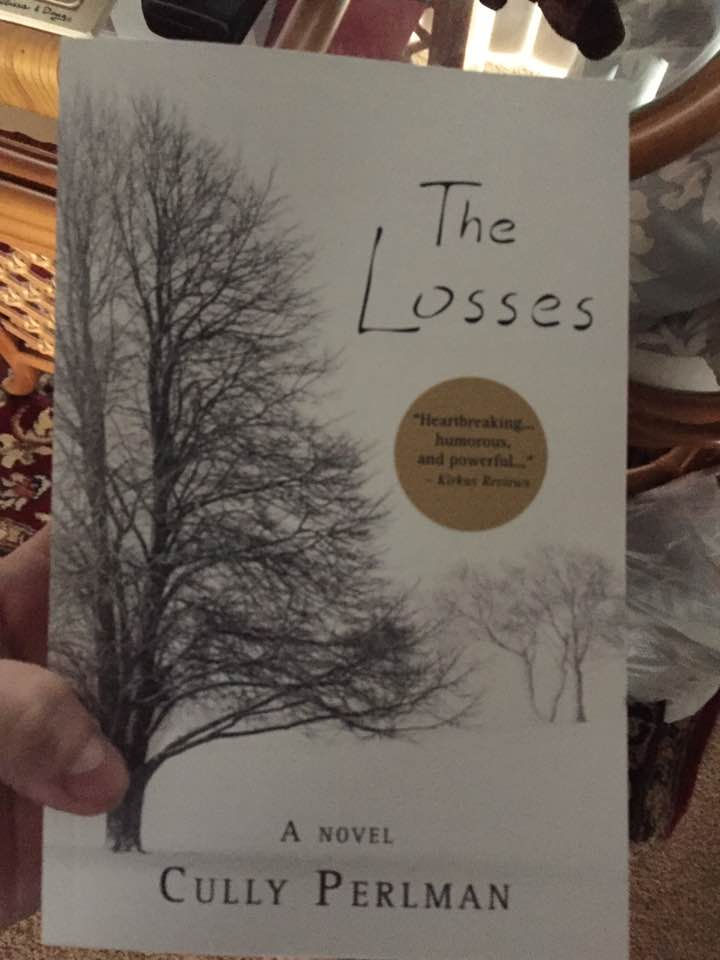
Cully Perlman is author of a novel, THE LOSSES. He can be reached at Cully@novelmasterclass.com
*Any affiliate or other commissions received by NovelMasterClass, which are probably about 8 cents a year, go towards keeping this blog up for free. If you can donate to help us keep going, we’ll say thank you in advance.


Comments