
The Best-selling Novels of 2025

I recently spoke with a long-time creative writing professor friend of mine about the writing he’s seen over the last couple of years, both in undergraduate and MFA Creative Writing classes. Things have changed from when I was growing up and studying literature. The books and drama and authors that we were taught back then were books pulled from “the literary canon.” The Epic of Gilgamesh. Oedipus the King by Sophocles. Hamlet by Shakespeare. Pride and Prejudice by Jane Austen. Frankenstein by Mary Shelley. The Great Gatsby by F. Scott Fitzgerald. Animal Farm by George Orwell. The Pearl by Steinbeck. The Catcher in the Rye by J.D. Salinger. Heart of Darkness by Joseph Conrad. And short stories like the Killers and A Clean, Well-Lighted Place by Ernest Hemingway.
But these days young writers and readers seem to have no clue who any of these people are. They read books about dragons and vampires and wolves in a genre known as “Romantasy.” They say things like, “Why would I want to write about real life, when life sucks? I just want to escape from reality.” They read and write about the realm of this place and that place, about fire, about queens, about characters and places with names that feel like typos. Long, long typos. And I get that I’m old. That I sound bitter. That I just don’t understand why “younger” people are reading about things that I find . . . silly. And why young writers (not all) believe using AI in their writing is semi-okay. I get that it’s me. I get AI is a tool that’s inevitably going to be so accepted that no one will care that “authors” will write “books” in a day. I do. I just find it sad. And a bastardization of something that was once a calling and craft to be respected, rather than something produced on a Walmart factory conveyor belt with cheap parts and short lifespans.
The list of the best-selling novels of 2025 is a tough one for me to swallow. Here’s the Hardcover and Paperback list of the top 60 novels (again, the numbers may be different from week to week, so what’s here isn’t what’s necessarily what you’d see if you look right now). I’ll get to why I’m so depressed about it right afterwards. This was compiled from the New York Times and other resources. They are in no particular order, as the sales figures change all the time.
Brimstone by Callie Hart
The Widow by John Grisham
Alchemised by SenLinYu
The Secret of Secrets by Dan Brown
Gone Before Goodbye by Reese Witherspoon and Harlan Coben
The Book of Azreal by Amber V. Nicole
The Intruder by Freida McFadden
Quicksilver by Callie Hart

Return of the Spider: An Alex Cross Thriller by James Patterson
The Correspondent by Virginia Evans
Exit Strategy (Jack Reacher) by Lee Child and Andrew Child
Onyx Storm (Wing and Claw Collection) by Rebecca Yarros
Mona’s Eyes by Thomas Schlesser
The Seven Rings: The Lost Bride Trilogy, Book 3 by Nora Roberts
Nash Falls by David Baldacci
The Housemaid by Freida McFadden
Murder at Holly House by Denzil Meyrick
Project Hail Mary by Andy Weir
The God of the Woods by Liz Moore
Merry Christmas, You Filthy Animal by Meghan Quinn
Wicked: The Life and Times of the Wicked Witch of the West by Gregory Maguire
The Housemaid’s Secret by Freida McFadden
Lights Out (Into Darkness Series 1) by Navessa Allen
The Silent Patient by Alex Michaelides
The Nightingale by Kristin Hannah

Good Spirits by B.K. Borison
A Court of Thorns and Roses by Sarah J. Maas
The Housemaid Watching by Freida McFadden
The Tenant by Freida McFadden
James by Percival Everett

Battle Mountain by C.J. Box
Lethal Prey by John Sandford
Fourth Wing by Rebecca Yarros
Say You’ll Remember Me by Abby Jimenez
Enchantra by Kaylie Smith
The Perfect Divorce by Jeneva Rose
Great Big Beautiful Life by Emily Henry
25 Alive by James Patterson and Maxine Paetro
A Curse Carved in Bone by Danielle L. Jensen
Nightshade by Michael Connelly
Never Flinch by Stephen King
Atmosphere by Taylor Jenkins Reid
Caught Up by Navessa Allen

Don’t Let Him In by Lisa Jewell
Edge of Honor by Brad Thor
Rose in Chains by Julie Soto
An Inside Job by Daniel Silva
The Hamptons Lawyer: A Jane Smith Thriller by James Patterson and Mike Lupica
My Friends by Fredrik Backman
Accomplice to the Villain by Hannah Nicole Maehrer
We Are All Guilty Here by Karin Slaughter
Katabasis by R.F. Kuang

Framed in Death by J.D. Robb
The Impossible Fortune by Richard Osman
Mate by Ali Hazelwood
The Black Wolf by Louise Penny
The Things Gods Break by Abigail Owen
Bonds of Hercules by Jasmine Mas
Empire of the Dawn by Jay Kristoff
Queen Esther by John Irving
*NYT Bestsellers for 2025
Now, I’m a literary fiction guy. There are some literary fiction bestsellers above, including James by Percival Everett, Queen Esther, by John Irving, Thoms Schlesser’s Mona’s Eyes, and others. We see entries by some familiar names, multiple entries by multiple authors (most whom I’ve never heard of, though obviously that means nothing), and, frankly, just a lot of books that are probably fun to read but that, for me anyway, are like Mallomars cookies—you’ll eat one, forget you ate it, eat another, and before you know it you’ve eaten half the box. What I mean by that is that they’re forgettable fiction. They’re books that you read to forget about real life (as my friend’s students have said), and you move on to the next one. There is nothing wrong with that. It’s just not what I find appealing in fiction. It’s not why I write, nor are these examples of fiction that will stand the test of time the way Don Quixote does. The way One Hundred Years of Solitude will do. Or To Kill a Mockingbird, Moby Dick, The Lord of the Rings, Mrs. Dalloway, Beloved by Toni Morrison, On the Road by Jack Kerouac, The Sound and the Fury by William Faulkner. And for me, that’s a shame. It feels like the craft, especially now with Artificial Intelligence barging in and AI companies stealing writers’ works and then rehashing their words for the thieves (yes, thieves) who go on to “write” novels using AI, is dying a semi-quick death. Hate me and my words if you want. Call me an elitist. Whatever. That’s how I feel. Bashing me doesn’t change that.
a lot of books that are probably fun to read are like Mallomars cookies—you’ll eat one, forget you ate it, eat another, and before you know it you’ve eaten half the box. What I mean by that is that they’re forgettable fiction, and that's not what I want to write

Whether or not if it was William Faulkner who “was known for his disdain for commercial success and the more accessible writing styles of other authors” who said it, but I sometimes feel the same way he does about certain successful authors that are commercially successful. He said, he “hoped writers who sold a lot of books would get hit by a truck.” Obviously it’s said in jest, but writers who spend years writing literature, who study it, who understand the history of fiction, etc. etc. often balk at other writers who sell a million books of what they consider inferior writing. Again, hate me if you want, but I’m one of those people. I’m not saying I’m Shakespeare, but if you’ve written anything you understand the difficulty of writing in different styles. When I write a novel that’s “easy writing,” I can knock a book out in a few weeks. My issue? I don’t want to write those types of books. That’s why it takes me forever to write more “literary” novels. Novels that require experimenting with style, with voice, with words, with plot, with other things that change the perspective of one’s readers. I just sent a novel I wrote (which I think is a perfectly fine novel that came out quickly and is written, in my opinion, well) to an author friend. She read it in a day and a half. And then she provided feedback. Her feedback: It has everything there. I just prefer your more literary novels. And what did I think? ME TOO!
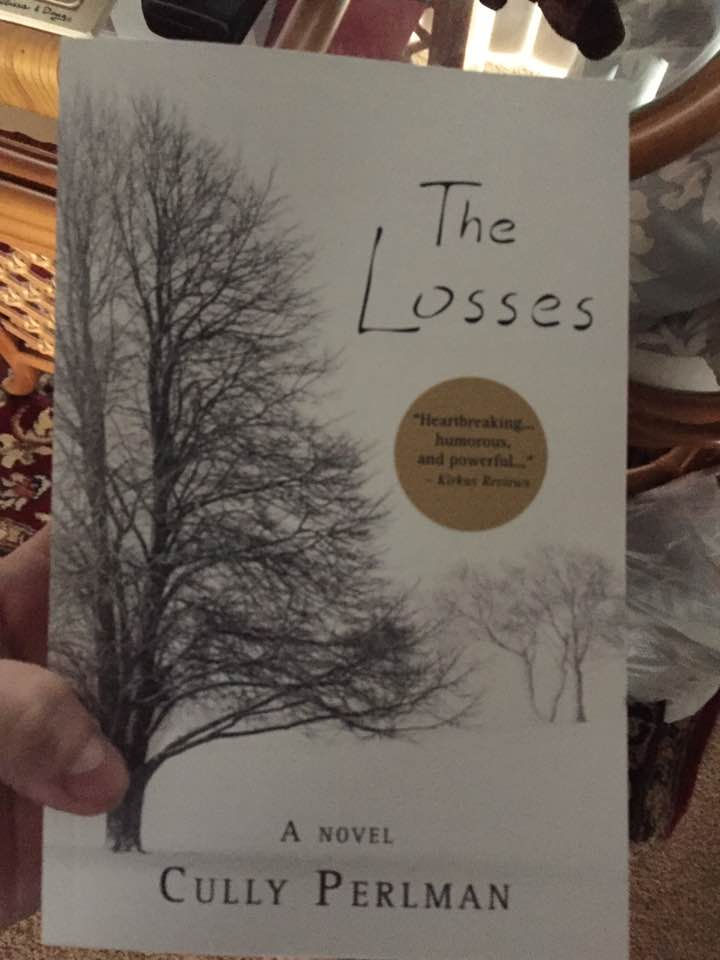
Cully Perlman is the author of a novel, THE LOSSES. He thinks writers using AI to write their fiction aren’t writers.
*Some of the links in this post may generate a small commission to Novel Master Class. Any commissions are used to keep this site free by paying for the platform, hosting fees, and so on.


Great reflection on how literary tastes evolve beyond the traditional canon. While classics remain foundational, today’s bestselling novels reveal new voices shaping culture and imagination. In the middle of this shift, a thoughtful Christian influence book can also offer moral depth and narrative purpose, showing how timeless themes continue to resonate alongside modern storytelling trends for readers across generations worldwide.
A few random thoughts. AI writing is kind of like porn. One wonders, have not all of the sex scenes, acts, fantasies been played out, yet porn just keeps coming. (Sorry about the pun.) But also there maybe various reasons to read. When I fly I always pick up a Reacher or Dirk Pitt novel, because I want something quick, immersive, and eminently easy to put down. Personally, I detest the ambiguity that seems to be the hallmark of current litfic, I don't want to wonder if I "got it." I note that this rarely applies to classics which still placed story first. So if I want to think, perhaps I will pick an author in my genre and drill into…