
RELIGION IN FICTION

According to a quick Google search, the Bible “is the all-time best-selling religious book, with over 5 billion copies sold, followed by the Quran, with an estimated 3 billion copies.” These are followed by historical best-sellers that include The Book of Common Prayer (over 300MM sold), The Pilgrim’s Progress (250MM sold), and modern books like The Purpose Driven Life (30MM sold) and Jesus Calling (10MM sold). Book Riot created a list for the 100 Must-Read Novels About Religion. I have to believe there’s an infinite number of writings not accounted for by scholars simply because of the sheer number of religions out there and the texts associated with those religions would be too many for anyone to accurately estimate. Our post today deals with how religion influences or is employed to convey meaning, to promote or utilize religious themes to advance plot, and how authors use religious ideas and symbols through signification, i.e., the act or process of signifying by signs or other symbolic means to, again, convey meaning and, in many cases, establish the mood, the feeling, the je nais sais quoi of, in this case, novels.
Again, per Google, here’s a list of the major world religions, other religions, and belief systems, so we have a basis from which to work from:
Major World Religions
Christianity: Largest, with denominations including Catholic, Protestant, and Eastern Orthodox.
Islam: Second largest, with major branches including Sunni and Shia.
Hinduism: Primarily practiced in India, known for diverse traditions.
Buddhism: Founded on the teachings of Siddhartha Gautama.
Sikhism: Monotheistic faith originating in the Punjab region.
Other Religions and Belief Systems
Judaism: Abrahamic faith with significant history and cultural focus.
Baháʼí Faith: Teaches the unity of all religions and humanity.
Confucianism: Primarily a philosophical and ethical system from China.
Taoism: Chinese philosophy emphasizing living in harmony with the Tao.
Shinto: Indigenous spirituality of Japan.
Jainism: Indian religion emphasizing non-violence (ahisma).
Zoroastrianism: Ancient monotheistic faith from Persia.
Wicca: Modern pagan, nature-based religion.
Chinese Traditional Religion: A mix of local beliefs and practices.
Spiritism/Spiritualism: Belief in the continuation of life after death.
Indigenous and Folk Religions
Ethnic or Tribal Religions: Often localized, prevalent in Africa and the Americas.
Afro-Brazilian Traditions: Includes religions like Candomblé and Umbanda.

Other Classifications
Religiously Unaffiliated/Agnostic/Atheist: A significant demographic, representing those not practicing a formal religion.
New Religious Movements: Includes faiths like Tenrikyo, Eckankar, and modern paganism
Now, me personally, I dive into religious themes only tangentially when I write fiction, and mostly execute my religious tidbits through signification, meaning I’ll mention a saint or a piece of scripture, a symbol (such as a red door, which represents the blood of Christ, a place of sanctuary and refuge and safety, a reference to the Holy Spirit). Or I may describe a character’s physical or psychological journey through some sort of religious metaphor, and the reader’s imagination or knowledge of religious subject matter will do the rest. Or so that’s the idea. It’s a cheat for me, I recognize, but it’s one I’m okay with. I’m not a religious person, though I have been Bar Mitzvahed. I have certain (or had certain) people in my family that walked around all their lives with bibles. So, I’m not completely ignorant of religious traditions.
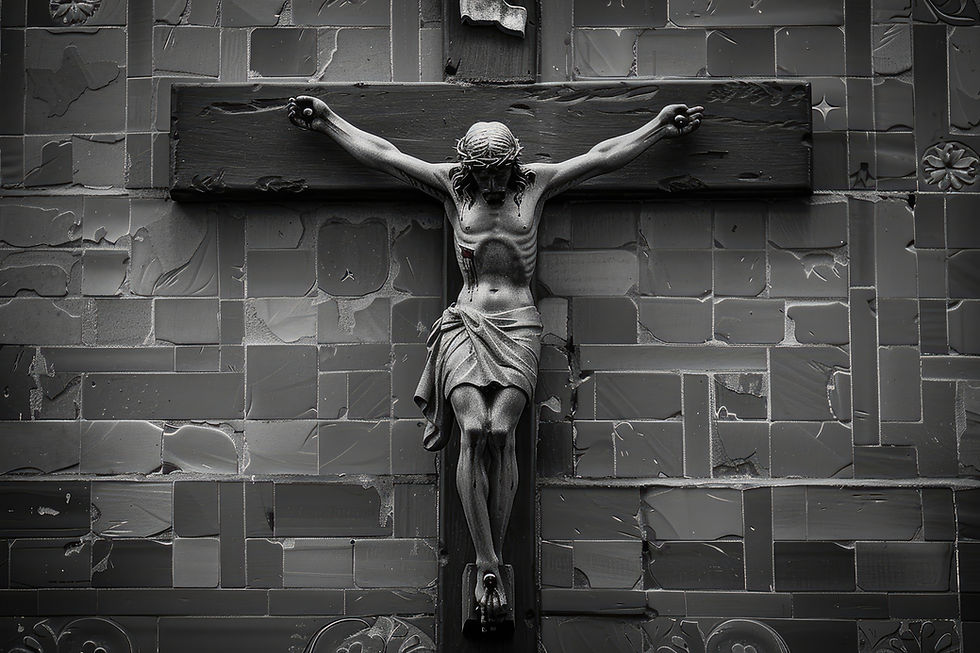
For me, fiction doesn’t have to touch on religion, but I find that the world in which certain characters live, when they do involve some aspect of religion, whatever religion, is enhanced by their reference to piety, the promotion of social conflict, through extremist views exacerbated by incorrect or skewed interpretations of those religions and their texts. There’s just something fascinating when characters’ lives are consumed by the things they learned: Catholics and guilt, shame, sin, the obligation to attend mass, wearing crosses and crucifixes, and so on. The dichotomy between the Holy Quran promoting peace, justice, tolerance and forbidding extremism while also being hijacked by extremist clerics intentionally misinterpreting certain verses to justify violence against the “infidels.” Judaism observing Sabbath, keeping Kosher, meaning preparing food in accordance with Kashrut, Jewish dietary laws that originate from the Torah and which animals and foods may be eaten, and so on. And how Sikhs meditate on God’s name (Simran), wear the five Ks (Panj Kakar), which are Kesh (uncut hair), Kanga (wooden comb), Kara (iron/steel bracelet), Kachera (cotton undergarments), and Kirpan (curved sword). Now, imagine all of the rest of the beliefs and practices, garments and gods of all the other religions combined. The possibilities for using all of these things in fiction is endless.
For me, however, much has to do with the novels I’ve read and that have caught my attention, as well as how I use my religious references to move my novels forward and, of course, with the hope that teaching someone something about religion, through the very act of providing information and perhaps knowledge my readers would have never been exposed to otherwise, will keep them turning the pages. I’d like to touch briefly on some novels that I find religious references, practices, and beliefs to be not only part of the author’s (and their characters’) worlds, but how those practices and beliefs improved those works through the actions those characters were driven to take.
Support NovelMasterClass if you can. We appreciate all the support!
If you know anything about Dennis Lehane, you know he incorporates themes of guilt, the search for grace over piety, redemption, patriarchy, and in general the histories of many of his characters are solidly influenced by the things they learned, and the ceremonies (confessions, wakes and funerals, first communions, and other involvement with the Catholic church). Naturally, Lehane’s characters tend to live in Irish and Italian neighborhoods, which are predominantly Catholic (Lehane grew up in the Dorchester neighborhood of Boston, Massachusetts, where he was exposed to much of what he writes about. Lehane, if you’ve read any of my previous posts, is one of my favorite writers. Right now, I have his Mystic River (one of my all-time favorite novels), and Small Mercies two feet to my right, sitting on my desk. Below those novels are James Joyce books and drug cartel books (all nonfiction), and above thm are the Odyssey, a book called Allusions in Ulysses by Weldon Thornton, and Salman Rushdie’s The Satanic Verses. Good company indeed, and books I reference for the novel I’m currently writing a first draft of.
There’s something extraordinary of how Lehane leverages Catholicism. Lehane “describes himself as a ‘literary Catholic,’ using the faith's atmospheric impact on storytelling rather than adhering to strict dogma.” – Google AI Overview. If you’ve lived around Catholic churches and attended Catholic ceremonies like I have, having grown up for a time in Brooklyn, New York, and then basically everywhere else I’ve lived, primarily in Miami, you understand what’s happening, or, at the very least, feel the depth and immensity and importance of being in the church and experiencing what your cousins, uncles, aunts, grandparents, whoever, are participating in. There’s a great line in Lehane’s Shutter Island that I particularly enjoy (although Lehane’s got about ten on each page of every book, but this one goes like this: “God loves violence. You understand that, don't you? ... Why else would there be so much of it? It's in us. It comes out of us. It is what we do more naturally than we breathe. We wage war. We burn sacrifices. We pillage and tear at the flesh of our brothers. We fill great fields with our stinking dead. And why? To show Him that we've learned from His example.” It’s a line the warden on Shutter Island tells Teddy Daniels, who, if you’ve seen the movie, is played by Leonardo DiCaprio. And lines like that, those few sentences, they’re worlds onto themselves. It’s what good literature leveraging religion is all about. And Lehane’s a master at it.

RELIGION IN FICTION
Fyodor Dostoevsky’s The Brothers Karamazov, his final novel, is another novel that uses religion to explore the existence of God, morality, free will, faith, and more. The novel is about three of Karamazov’s sons, and another illegitimate one. Their father, Fyodor Pavlovich Karamazov, is murdered, and there is a trial where Karamazov’s eldest son, Dmitri, is wrongly accused of killing his father for his inheritance. On the religious front and thematic front, the novel, per the Google, is “a profound philosophical novel centered on the conflict between faith and rational atheism, heavily rooted in Russian Orthodox Christianity. Through characters like Alyosha (devout faith) and Ivan (skeptical intellect), Dostoevsky explores divine love, the problem of evil, suffering, and the necessity of free will.” (I won’t provide any spoilers, so just read the book). But here are some quotes from the novel:
“God loves violence. You understand that, don't you? ... Why else would there be so much of it? It's in us. It comes out of us. It is what we do more naturally than we breathe. We wage war. We burn sacrifices. We pillage and tear at the flesh of our brothers. We fill great fields with our stinking dead. And why? To show Him that we've learned from His example"
"Every time you pray, if your prayer is sincere, there will be new feeling and new meaning in it, which will give you fresh courage, and you will understand that prayer is an education". According to Google, the quote “emphasizes that sincere, repetitive prayer is a transformative, educational experience that brings renewed courage, fresh meaning, and deep spiritual insight every time it is practiced.”
And here’s another, from Ivan, the intellectual, the atheist, and the second son of Fyodor: “If God does not exist, everything is permitted.” What he’s saying is that morality goes out the window if there’s no God to ensure the bad are punished. It’s lines like these that bring the familial conflicts and, for me, the interesting parts of the character dilemmas, thoughts, beliefs, internal conflicts, and, more than anything, the feeling, the aura, the world you get to experience by going on the literary journey with the characters in the novel. Religion, when inserted and prominent in works of literature, pulls me in. It yanks me by the collar because the struggles characters face when put up against their beliefs or the beliefs of those around them, when the circumstances they’re thrust into come in direct conflict with God’s word or Buddha’s or Huitzilopochtli’s or Allah’s (or whoever else) creates the dilemmas that are nearly impossible to overcome. It’s one thing to fight your wife or husband, your boss, your lover. It’s quite another when you’re fighting the word of Jesus Christ of Nazareth, the Messiah and Son of God. The stakes, of course, are much, much higher.
Here’s a quote from the first draft of a novel I’m currently working on. I wrote it. Maybe it’ll be a spoiler, but maybe not. I’m on the first draft. But I like it. It makes me feel something, and if something makes me feel something, I’d love to keep it. But I’m also a firm believe in killing your darlings. Right now, this is most certain a darling, at least to me.
“I would never forgive myself for Amy’s death. Instead, I would deliver it worse to men like me, to the wayward boy and the errant youth I had been, and the pernicious man I had become, ever since the day the hands before me had coveted the temporary focus of Jesús’s inconsequential gaze. The triviality of his lips upon Amy’s, and only briefly. James 4:2: “You desire but do not have, so you kill. You covet but you cannot get what you want, so you quarrel and fight. You do not have because you do not ask God.” And I had never asked God. I just hadn’t.” (Jesús, in this instance, is not Jesus, the Son of God, but rather a character in the novel). Another interesting fact (in case you're unaware) is that there are multiple people in the Bible named Jesus, including Jesus Barabbas, Jesus Jestus, and Joshua from the Old Testament, who goes by Jesus in the KJV, the King James Version of the Bible.
“Religion is powerful in novels,” le Google says, “because it acts as a fundamental, ‘marrow-deep’ element of the human experience, providing instant, deep-seated character motivations, moral dilemmas, and structural, world-building stakes.” And to that, I say, damn straight!
Cully Perlman is author of a novel, THE LOSSES. He can be reached at Cully@novelmasterclass.com

*Any commissions received from affiliate links are used to pay for the website platform and hosting fees in order to keep this site free to writers like you. Please feel free to donate if you’re able to. Thanks!



Comments