
LAY vs LIE and TRANSITIVE and INTRANSITIVE and PREPOSITIONS and OBJECTS

A teacher and friend of mine gave me this sound piece of advice after noticing I had no clue what I was doing when it came to a particular word: NEVER, he said, use the word “lay” because you’re going to get it wrong. And you know what? He was right. Every time I used it, even when I looked up how to properly use it, I got it wrong. I felt like I was bashing my head against the wall, because I used the word at least once in my fiction, whether in a short story, a novel, or, actually, even in my nonfiction pieces. Lay was the bane of my existence. Well, maybe not the bane of my existence, but you get what I’m saying. So, I thought I’d give a little clarification here, in case you’re having the same problem as I did (and probably still do, to be honest).
So, here it is.
Lay means to “place something down flat,” while lie means “to be in a flat position on something.”
Lay is transitive. This means it requires an object (a noun, a pronoun, a phrase that receives the action of a verb or is governed by a preposition [prepositions are words that show relationships of time, location, direction, meaning words like “at,” “to,” “with,” “on,” “in,” etc.], to act upon.
Lie, however, is intransitive. It describes something that moves on its own or already in position. Here’s where the trick party comes in: “laid” is the present tense of lay, and “lay” is the past tense of “lie.” Simple, huh? Yeah. I didn’t think so either.

There are plenty of books you can buy and websites to review if you want to take a deep dive into grammar, which I recommend.
Back to Prepositions
Prepositions combine with nouns or pronouns to create what’s called a “prepositional phrase.” So, think about it like this: a prepositional phrase is a preposition + an object (noun or pronoun). An example of this would be “at the store.”
There are different types of prepositions, including “direction,” “location or place,” and “time.”
Direction Examples:
Into, through, across, to, onto
Example: Mike walked across the alley.
Location/place Examples:
In, on, at, between, above, under
Example: The remote is stuck between the couch cushions.
Time Examples:
On, before, during, after, in, at
Example: I was born in 1979.
Of Manner and Purpose Examples:
With, by, for
Example: He drove to the pub for a beer.
Direct Objects vs Indirect Objects
Grammar’s never been my strong point. Over the decades that I’ve been writing, I’ve just sort of picked up on what’s correct when it comes to grammar and what’s incorrect. And I still get it wrong often. I think it’s because of the way my mind works. I’m a right-brainer, which means I’m creative, imaginative, artistic, emotional, and so on. Left-brainers are logical, analytical, factual, sequential, etc. So, when I was in grad school studying English and literature, my brain shut down when it came to rhetoric and grammar and, well, anything that came close to telling me I had to follow certain rules. I’m a writer, I told myself. I’m not here to learn how to teach someone the past participle (a verb form that expresses a completed action, for example, “they had worked through the night”). It just wasn’t my thing. I wanted people to read and study my work; I didn’t want to memorize a bunch of things I did naturally. Anyway, direct and indirect objects. Let’s do this.
Direct objects are persons, places, or things that are directly receiving the action of the verb.
Here are a couple examples of direct objects (remember, a direct object can be a singular noun or a noun phrase (a group of words that act as a noun together):
Archie draws sunsets. “Sunsets” is the direct object.
Disney World raised their prices last week. “Their prices last week” is the direct object.
Indirect objects tell you to whom or for whom the action is being done. It’s usually placed immediately before the direct object.
Here are a couple examples of indirect objects:
We ran to the contractor. (To whom did we run? The contractor. The contractor is the indirect object pronoun.)
We ran to him/her. (The pronouns him or her could be used to replace the indirect object here.)
A teacher and friend of mine gave me this sound piece of advice after noticing I had no clue what I was doing when it came to a particular word: NEVER, he said, use the word “lay” because you’re going to get it wrong.
Ready to test your memory? Take the test below to see if you’ve figured out Lay vs Lie. Answers are at the bottom. Good luck!
In the following sentences, which phrase uses the present tense of lie (to recline)?
A. I lay down
B. I am lying down
C. I lie down
D. I have lain down
In the following sentences, which phrase uses the past tense of lie (to recline)?
A. I lay down
B. I am lying down
C. I lie down
D. I have lain down
In the following sentences, which phrase uses the past participle of lie (to recline)?
A. I lay down
B. I am lying down
C. I lie down
D. I have lain down
Which is the -ing form of lie (to recline)?
A. I am lying down
B. I will be laying down
In the following sentences, which phrase uses the present tense of lay (to place)?
Yesterday, I laid the flowers down
I am laying the flowers down
I lay the flowers down today
I have laid the flowers down
In the following sentences, which phrase uses the past tense of lay (to place)?
A. Yesterday, I laid the flowers down
B. I am laying the flowers down
C. I lay the flowers down today
D. I have laid the flowers down
In the following sentences, which phrase uses the past participle of lay (to place)?
A. Yesterday, I laid the flowers down
B. I am laying the flowers down
C. I lay the flowers down today
D. I have laid the flowers down
What is the -ing form of lay (to place)?
A. I am lying down the chess pieces
B. I am laying the chess pieces down
And remember, lay is also the past tense of lie.

LAY vs LIE and TRANSITIVE and INTRANSITIVE and PREPOSITIONS and OBJECTS
Lay vs lie and transative and intransitive and prepositions and objects are incredibly difficult for most of us to remember. English, as we know, is one of the more difficult languages to learn. But having taught English to speakers of other languages, practice, I know, makes perfect. So, my friends, I'd recommend picking up that grammar book and getting to work.
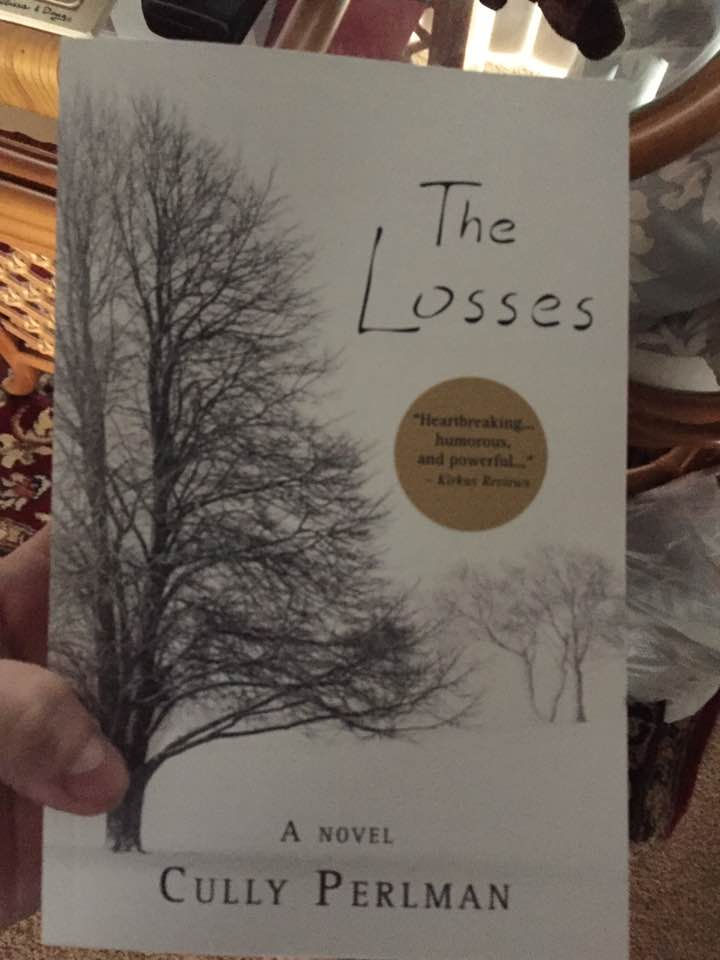
Cully Perlman is author of a novel, The Losses. He can be reached at Cully@novelmasterclass.com
*Any affiliate commissions go directly towards paying for hosting and platform costs. Without your support, we would not be able to provide this site for free. Thank you!


Comments