
SHOW, DON’T TELL--THE NUMBER ONE RULE IN FICTION
If you’ve ever been to any creative writing class, gotten your MFA in Creative Writing, worked with experienced writers at a workshop, or read anything about the elements of fiction, you know the maxim “show, don’t tell” is one of the first things you’ll hear. “Showing” means that you’re pulling the reader into the world of your characters through experiential, sensory detail and action rather than “telling” the reader what’s happening through direct exposition or the narrator “reporting” what’s happening.
One of the ways I like to think about “telling” is this: have you ever watched a television show or movie where there’s a voiceover giving you backstory or narrating the scene you’re watching or about to watch? Think of the narrator/voiceover on the Dukes of Hazzard. Know who that is? That’s Waylon Jennings, the famous country music star, who’s known as the “Balladeer” on the show. He’s the guy “telling” you what’s happening: Bo and Luke Duke are about to jump the General Lee over the canyon. Daisy Duke is about to get into it with Boss Hogg. Rosco P. Coltrane and his basset hound Flash find themselves in quite a predicament, sinking into the quicksand. Waylon’s “telling” you what’s happening, rather than “showing” you what’s happening. Oh, and Waylon? He’s the guy singing the show’s hit theme song, “Good Ol’ Boys.” If you’re Generation X or, well, any generation alive right now who sat in front of your TV after school and didn’t realize the impact the Confederate Flag on the top of that orange 1969 Dodge Charger would have in the future, now you do. But I bet you can’t help singing along to the words you heard while watching the show:
Just a good old boys
Never meanin' no harm
Beats all you never saw
Been in trouble with the law
since the day they was born
Anyway, let’s get back to why we’re here:
SHOW, DON’T TELL--THE NUMBER ONE RULE IN FICTION
Showing instead of telling means you, the author, is using a narrative technique that employs dropping your reader directly into the world you’ve created by employing their senses and through the use of subtext (the meaning and underlying theme(s) shown through character dialogue, their actions and gestures, and so on without them coming out and explicitly saying it) so that your reader experiences the story you’re telling rather than you/the narrator telling them.
Here’s an example of a scene where the author/narrator is “telling” the reader what’s happening rather than “showing” the reader what’s happening:
“The company stood at attention, each man looking straight before him at the empty parade ground, where the cinder piles showed purple with evening. On the wind that smelt of barracks and disinfectant there was a faint greasiness of food cooking. At the other side of the wide field long lines of men shuffled slowly into the narrow wooden shanty that was the mess hall. Chins down, chests out, legs twitching and tired from the afternoon's drilling, the company stood at attention. Each man stared straight in front of him, some vacantly with resignation, some trying to amuse themselves by noting minutely every object in their field of vision,—the cinder piles, the long shadows of the barracks and mess halls where they could see men standing about, spitting, smoking, leaning against clapboard walls. Some of the men in line could hear their watches ticking in their pockets.”
Excerpt from “Three Soldiers” by
John Dos Passos
Notice some of the phrases: “the cinder piles showed purple with evening;” “long lines of men shuffled slowly;” “there was a faint greasiness of food cooking;” “Some of the men in line could hear their watches ticking in their pockets.” Sounds a lot like reporting, doesn’t it?
When you’re “telling” in fiction, you’re using passive, state-of-being words, adverbs, and summary. Think: “was” and “is,” “were,” “been,” and “are.” Other thought verbs and feeling verbs that fall under “telling” are “seemed,” “appeared,” “heard,” “mused,” “wondered,” “thought,” “realized,” and so on. You want to push character actions that are communicated through adverbs aside and use evocative verbs instead so that you’re “showing” instead of “telling.” Think: she “punched,” or he “jumped,” or they “squinted.” Like that, though obviously there are exceptions to everything I’m saying here.
When you’re “showing,” when you’re in scene, you’re using active words, words that allow you to picture what’s happening via character action. Here’s an excerpt from the great short story tell John Cheever’s “The Swimmer”:
“He took off a sweater that was hung over his shoulders and dove in. He had an inexplicable contempt for men who did not hurl themselves into pools. He swam a choppy crawl, breathing either with every stroke or every fourth stroke and counting somewhere well in the back of his mind the one-two one-two of a flutter kick.”
Excerpt from “The Swimmer” by
John Cheever
Notice the action/the showing in these short few sentences: “He took off a sweater;” “dove in;” “He swam.” Things are happening, and you’re “seeing” them happen. But notice, also, the description within the passage as well. The sweater is “hung over his shoulder.” He’s swimming in a “choppy crawl, breathing . . . with every stroke . . . one-two of a flutter kick.” As readers, we “see” him taking off the sweater. We “see” him diving in, and “swimming,” and we feel and see the “choppy” crawl. Our senses are being called into action, and so we’re more invested. We’re more in the world of our characters because we feel like we’re a part of what’s going on rather than sitting on someone’s lap as they tell us a story. That's why show don't tell--the number one rule in fiction is so important.
And here’s an excellent example of showing rather than telling from Hemingway’s “The Old Man and the Sea”:
“The old man was thin and gaunt with deep wrinkles in the back of his neck. The brown blotches of the benevolent skin cancer the sun brings from its reflection on the tropic sea were on his cheeks. The blotches ran well down the sides of his face and his hands had the deep-creased scars from handling heavy fish on the cords. But none of these scars were fresh. They were as old as erosions in a fishless desert.
Everything about him was old except his eyes and they were the same color as the sea and were cheerful and undefeated.
"Santiago," the boy said to him as they climbed the bank from where the skiff was hauled up. "I could go with you again. We've made some money."
The old man had taught the boy to fish and the boy loved him.”
This short excerpt is rife with examples of Hemingway showing the reader through a perfect construction of what’s happening through action and his use of the reader’s senses. See the “deep wrinkles” and the “brown blotches.” The “reflection of the tropic sea were on his cheeks.” The “deep-creased scars.” And the action of the characters: “the boy said to him as they climbed the bank . . . where the skiff was hauled up.” It’s almost like we’re watching a movie, even when he’s using the passive “was hauled up.” Hemingway in general, using his “Iceberg theory,” observes things objectively, and shows the reader what his characters are doing, saying, seeing, and so on. The technique leads to us “feeling” rather than just understanding what’s happening or has already happened. Sure, sometimes it’s hard to tell the difference because many of the same words are used when an author is showing or telling. But for me it’s often a “feeling” rather than something I can directly point to. Scenes, for me, are easier to identify the showing over the telling.
And here’s an excerpt from a post on the subject from the wonderful Jane Friedman about using gesture to show rather than tell:
“The third way to convey emotion through showing is through action or “gesture,” which can range from the smallest tic to the big behaviors.
Let’s go back to Paul and Harry:
Harry lunged for the ball, but Paul, coming from behind, gave Harry a hard shove. Harry stumbled, then fell with a cry.
Harry rolled on the court, clutching his right knee, his face twisted, eyes closed. “What’d you do that for?” Harry said through clenched teeth.
Paul twirled the racket in his hand. “You were acting like a jerk.”
Even without the dialogue you can tell what Paul is feeling. And Harry’s pain and shock are clear from his gestures.”

So, my advice is this: read the greats. Pay attention to the senses you’re using when you’re reading a sentence, a paragraph, a chapter, an entire novel. Understand when you’re using those senses and when you’re sort of just going along for the ride as the narrator is telling you what’s happening to your characters rather than you seeing what’s happening to your characters. At what point are you most invested? What words are being used to make you feel that way? What are your characters doing, action-wise? Do you smell anything? Do you taste anything? Do you feel anything? You should. The more closely you intentionally pay attention to these things, the more adept you’ll be at writing fiction where you show rather than tell your readers what’s happening. And that? That’s going to make your fiction that more compelling.
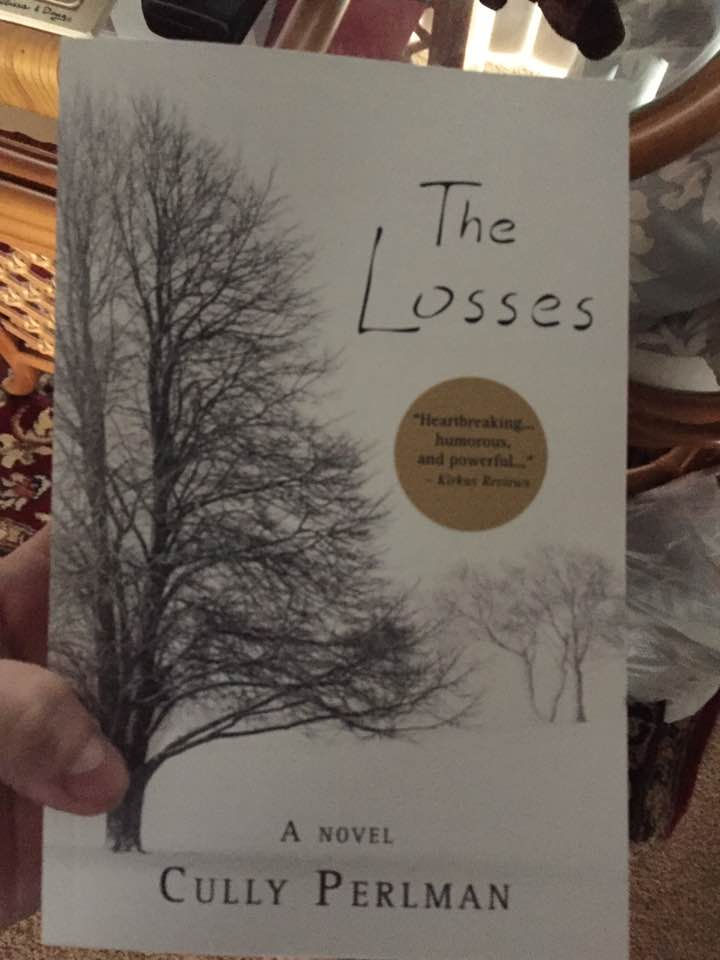
Cully Perlman is author of a novel, The Losses. He is also a substantive editor for hire. He can be reached at Cully@novelmasterclass.com
*Any affiliate commissions earned via this site go towards hosting and platform fees. Without your help, we wouldn’t be able to provide the free writing advice we do. So, thanks!


Wait a minute, didn't you just do a post on not using song lyrics? ;-) That has always baffled me. You quoted paragraphs out of copyrighted novels, which is legit because it falls under the "fair use." But you cannot quote one line from a song. Doesn't that also qualify for fair use?