
DIALOGUE AND DIALECTS IN FICTION WRITING

Last week we had a Dialogue Checklist that you can use to ensure your dialogue is doing everything dialogue in your novel or short story should accomplish. This week we're going more in-depth into dialogue. We'll be showing you good dialogue, imperfect dialogue, indirect dialogue, dialect, as well as touching on dialogue tags.
DIALOGUE AND DIALECTS IN FICTION WRITING
When characters talk to each other, it’s called dialogue
Dialogue must advance the plot of your novel. Dialogue cannot be mundane. It can be used for establishing who a character is, passing information on to the reader that the reader should know, to create drama and conflict, and so on. Dialogue and scene go hand in hand. Without dialogue and scene, all we have is summary, and your readers will put your novel down. They didn’t come to read how well you describe the landscape; they came to watch a movie created in their minds by consuming the action you’ve put down on paper for them.
Here’s an example of good dialogue:
“I can’t go.”
“To the mall? Why not?”
“I just can’t. It’s complicated.”
“The mall’s complicated?”
“No. The mall isn’t complicated. It’s who’s at the mall that’s complicated.”
“Sheila? You’re talking about Sheila.”
“Maybe.”
“Got it.”
“No. You don’t.”
Jimmy put his hand up. “Say no more,” he said.
Richie shook his head. “Just shut it, okay? Please. You don’t know what you’re talking about.”
“Okay,” Jimmy said. “No problemo.”
In this example we have Jimmy, and we have Richie, and we know what the problem is—that Richie probably likes Sheila, or maybe they’ve just broken up—we aren’t sure yet. But there’s tension there, and we can feel it by what they’re saying, but also by what they’re not saying.
And here’s an example of imperfect dialogue:
“I can’t tell you why I don’t want to go to the mall, because then you’ll know that the love of my life works at the Crate & Barrel, the store that has the black and white logo that’s next to the cookie shop, which is where I met her last Tuesday.”
“You mean Sheila? Sheila from our sixth-grade class who used to wear long skirts and whose father was a Baptist and a philanderer and who liked to sit around like he was the big man on campus, but he really wasn’t because it was only in his head?” Horrible, right?
Well, it’s horrible because the author is doing an information dump via the dialogue—dialogue should convey information, but in an organic way. Let the reader get the meaning, but don’t bog them down with too much information. Show, don’t tell.
Without dialogue and scene, all we have is summary, and your readers will put your novel down
Now, we’ve all read famous novels where the regional dialect is what sticks out the most, at least when we first start reading. Remember Faulkner’s The Sound and the Fury? If not, how about Irvine Welsh’s Trainspotting? Maybe you saw the movie.
Anyway, Dialect is language (words, expressions, speech) that is particular to a specific place or region or even just a group of people. If you’re writing dialect, be spare with it; too much dialect is distracting and difficult for the reader to follow, while just the right amount can give the world of your novel a specific flavor and ground your reader in a specific place. Not all of us are Irvine Welsh or William Faulkner. Dialogue and dialects in fiction writing are the same but different. Dialogue is what we're expecting. Dialect is a little flavor, and as mentioned above, too much will turn readers off.
When we write dialogue, we also write dialogue tags, the words that come before, in the middle, or after a character speaks. It tells the reader who’s speaking. For the most part, dialogue tags should try to stick to “he said” or “she said.” But again, you can always break the rules—IF and ONLY IF it what you do works. We don’t want to write dialogue tags that are distracting, like, “I’ll see you tomorrow,” Billy chortled. It sounds odd and “he said” works without getting in the reader’s way. We could say, however, something like “I’ll see you tomorrow,” Billy said, and laughed. It isn’t distracting, and it tells us something about Billy’s thoughts or demeanor at that particular moment.
While we normally think of dialogue as two or more characters speaking, there’s something called Indirect dialogue. Indirect dialogue is a summary of dialogue. It’s passing knowledge to the reader that a conversation took place, so that the reader understands something happened off the page that they need to know. An example might be something like, “Now that she and Jim were on the Ferris wheel, Sarah kept yapping about how she’d been on a Ferris wheel in Coney Island this one time, and her then boyfriend, Mario, kept hooting and hollering about a fight he had the day before, pummeled this guy from Brooklyn flat on his tail.” Sarah is telling Jim about another conversation she had, which is indirect dialogue. She doesn’t need to go into all the details, she just has to get what happened across to Jim and thus, the reader.
One way to increase tension in dialogue and to give insight into characters is to have your characters talking past each other. Characters talking past each other can be an effective way of creating compelling dialogue. It shows avoidance. It creates intrigue for the reader. For example:
James took the pack of cigarettes from his son’s backpack. “Where’d you get these?” he said.
“I have all A’s dad. All A’s. I made honor roll, too.”
James grabbed his son’s arm. “I asked you a question,” he said.
“If I make honor roll two more times,” Mike said, “I’ll have my pick of which college to go to. Harvard. Yale. Brown. Any of’em.”
“And on top of it they’re Marlboro reds? Marlboros, Mike?”
“Harvard,” Mike said, pushing the cigarettes away. “What’ll you think about that, pop? I bet you don’t know one person that’s ever gone to Harvard, do you?”
Indirect dialogue is a summary of dialogue. It’s passing knowledge to the reader that a conversation took place, so that the reader understands something happened off the page that they need to know
The best way to learn how to write compelling dialogue is by reading dialogue that captures your attention. Pick up your favorite novel or short story and read the dialogue. What do you notice? What do the characters say to each other? Is there a flow to the dialogue? Is it short or long dialogue? How does the author use dialogue tags? Do they use them minimally? Because you can, as long as it's clear who’s speaking. What’s happening in the scene? What are the characters doing while they talk that enhances the dialogue? Think about these things as you write dialogue. Remember, dialogue and action are the meat of your scenes. And as readers, that's what remember.
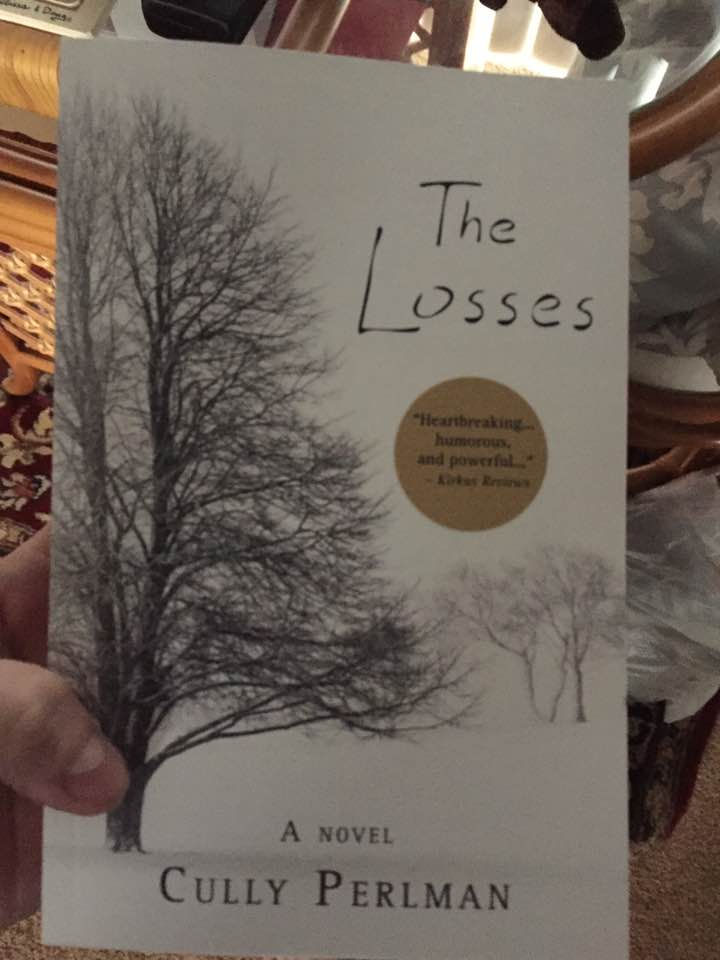
Cully Perlman is author of a novel, THE LOSSES. You can buy it here.
Need help with your novel or a one-on-one writing lesson? Contact Cully at Cully@novelmasterclass.com
*Any affiliate or other commissions/donations are used strictly to pay to keep this site free to you, our fellow writers.


Comments