
Why it Takes me Years to Edit my Novels

When I was growing up, I didn’t really read a lot. My earliest memory of buying a book was walking into the Barnes & Noble in Manhattan, which my mother took my brother and I to visit. The memory stands out to me because the place was gigantic. Rows and rows of books you could browse and buy and, in truth, get overwhelmed by. There was something special about that bookstore. If memory serves me, my mother had a cotton handbag with the B&N logo on it she carried around for years, even when we lived in Spain. Still, I just don’t remember sitting down throughout my childhood reading books. I was more about playing stickball and Kings, a handball game we played in Brooklyn in the late ‘70s, early ‘80s, watching shochets slice the necks of chickens for pre-Yom Kippur rituals in what’s called shechita, which is the process of minimizing the suffering of the animal being slaughtered, and sitting on our stoop talking about the Yankees. Somehow, years later, all these things led me to writing.
At first, I wrote bad poetry. I knew it was no good, that it was derivative, that I should probably try my hand at something else. So, I wrote a couple of short stories that were, I guess, okay. I started college and joined the college’s literary magazine, “editing” the fiction other college students were submitting. Really, all I was doing was telling the managing editor if I liked the story or not and then he or she (I can’t remember which) decided which stories he or she would read and consider for publication. There weren’t many published that I liked, if I recall. That was my intro into how literary magazines at colleges and universities worked. How I thought things worked was slightly different than the reality of how things actually worked. I’ve come to know that that’s how pretty much everything works, not only in the publishing industry but in life. And I think that’s what I’ve focused my literary career on: creating characters who believe they think they know how everything in their lives works, only to discover that their reality doesn’t quite match up to those beliefs.

I don’t remember sitting down throughout my childhood reading books. I was more about playing stickball and Kings, a handball game we played in Brooklyn in the late ‘70s, early ‘80s, watching shochets slice the necks of chickens for pre-Yom Kippur rituals
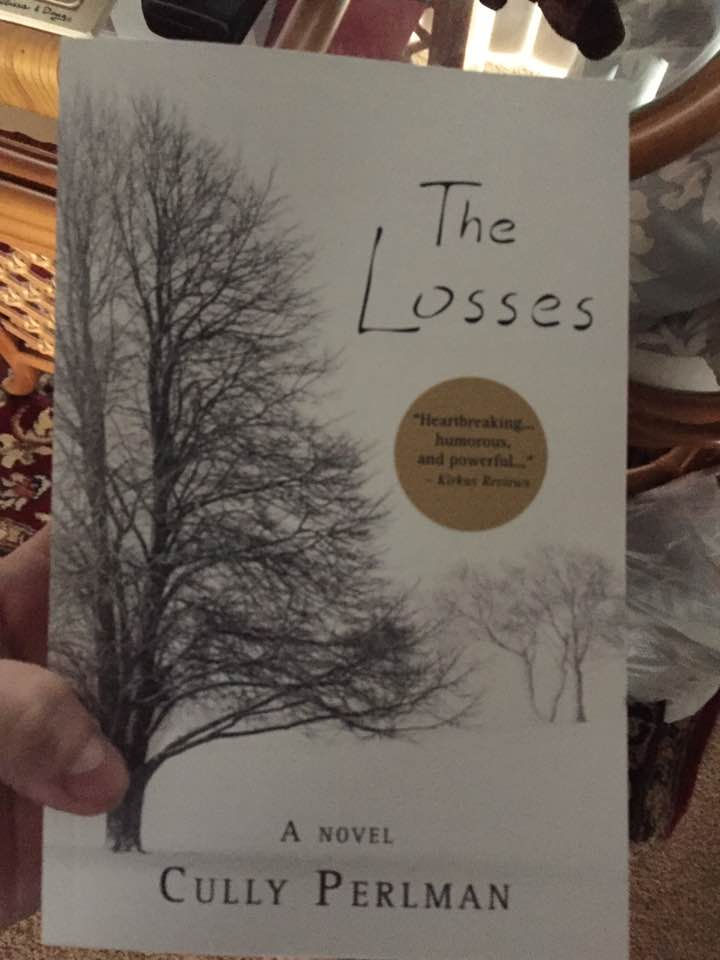
Over my life, I’ve written somewhere between fifteen and twenty novels. One, The Losses, was published by MidTown Publishing, a small indie press, back in 2016. That novel was one of those flukes writers talk about, the ones where they sit down, cut a vein, and everything pours out onto the page. It required minimal revision before the acquiring editor and publisher thought it was ready. Like most writers, once the book went out into the world, I saw things I wanted to edit. To revise. To improve. But I never did that. I believed it was “good enough,” and I had nine other novels calling my name. Every now and then I’ll read a passage from The Losses. I’ll admire a scene, some dialogue. An image. How did I do that so quickly, I wonder? How did those words come out so . . . right? I don’t think about that anymore. Now I think about the things I could have improved prior to signing off on the work before it was published. Now I think about what’s wrong in my work, rather than what’s right.
Which leads me to why it takes me years and years to edit my novels. The longest amount of time I’ve spent editing a novel is one I’ve been working on since 2002. The novel is about a WWII Liberator pilot. It began as a short story cycle, and then a novel, and then my MFA thesis in creative writing. I’m currently on about my 125th full edit. But that’s neither here nor there. The point is, I need perfection. This is why it takes me years to edit my novels. I need every word, every scene, every stretch of exposition to be perfect. To transition flawlessly from one paragraph to the next. To keep the reader reading without any impediments getting in the way of their enjoyment. I know it’s impossible, but impossible is not something that deters my compulsion for perfection. Because that’s what it is: a compulsion. But it’s a compulsion I’m okay with. It’s one that may prevent me from ever getting another novel published. I’d like to say that that’s okay, but it’s not. And yet.

What I can tell you is this: I put down a lot of books. A lot of books. I read reviews about how great this book is, or how “powerfully” some author’s tome has affected some critic’s view of the world. How a certain debut novel is “One of The Atlantic’s Great American Novels of the Past 100 Years!” But somehow more often than not, I disagree with that critic’s assessment. The enjoyment of fiction is subjective, isn’t it? It is. You know it and I know it. Still, we feel a little bit stupid when we don’t “get it.” I want to pull the author aside and ask them what they were thinking. Same with their editor. I’d tell you I don’t care about that sort of thing anymore, but I’d be lying. I do care, just not much.

For most of my adult life, I’ve read literary fiction. Mostly, I write it, too. It’s just what I tend to find interesting. And while I do defer to critics, while I do purchase novels recommended by them or by the Booker Prize Foundation Advisory Committee, or the National Book Award foundation, I’m starting to doubt their picks. Not all of them, just most. Sorry, not sorry.
To say I’ve given up on trying to get published is untrue. I have a couple of novels out right now making the rounds on the query cycle. Novels I have edited more times than I care to admit. I parted ways with my agent, who I loved, because I needed something more than I was getting. I turned down another agent, a very well-known one, because, well, we didn’t mesh on a personal level. That’s life, I suppose. We start relationships; we end them. C’est la vie. All I know to do is to continue editing. My books, I tell myself, deserve it. So, why not?
My author friends (I have a few) believe I should try to get my books published more aggressively. They say, Your book is already good enough to submit. They say, You don’t need to edit it anymore, what’s there to edit? Much, I think to myself. Almost there, I assure them. I’m almost there. And yet I continue editing, month after month, year after year, because that niggling little feeling in my gut tells me I can do better. That the scene on page 67 should be tighter. That the themes of loss and grief aren’t developed enough. That my character has not changed an iota by the last line of the book, when she should have changed a lot, given what she’s been through. The only way to make these things happen, I know, is through editing. Through revising. Through rewriting. So, I put the pot of coffee on, get the red pen, and I get to work. Day after day after day. After day. I’m ashamed of how many trees I’ve killed printing new drafts. And I only print a draft after I’ve edited my novels a good four, five times just on my laptop.

Do I want more of my fiction to be published. Of course I do. But I don’t want it to ever be at the expense of the work. I don’t want to receive an ARC in the mail that I consider subpar. I don’t want some critic, however much I find their opinions lacking, to bash something I know, in my heart, deserves bashing. Do I have dreams of seeing my books front and center at the local Books-a-Million down the block from where I live? Sure. You bet. But I’ve been doing this a long time. I don’t want people to feel my book didn’t touch them. That it fell short. That they decide somewhere along the way that it isn’t worth their time to finish reading it. And so, I’ll keep editing those nine novels I’ve been editing for so many years, the ones I think have a chance. I’ll finish the first draft of my tenth novel, the one I just started, because I feel it’s going to be a good one, maybe my next The Losses. But if past is prologue, I’ll simply have another draft of another novel that I’ll be editing for the next decade, and probably longer than that. I don’t ever want to send something out that I feel I can improve. As the great rap group Cypress Hill said, I ain’t goin’ out like that! And that’s the truth. Or it’s mine, anyway.
Cully Perlman is author of a novel, THE LOSSES. He can be reached at Cully@novelmasterclass.com
*Any commissions received via affiliate sites are used for keeping this site free for writers. Commissions are used to pay for hosting and platform fees.


Comments