
IS LITERARY WRITING DEAD?

AI has driven a metaphorical stake into the hearts of writers of all walks of life. Many of my friends, published novelists, have had their work stolen and used for teaching AI models how to write. Not only how to write, but how to write in their style or the styles of other writers—styles that have been honed over a lifetime of an author working on her craft. People (not writers, because they aren’t writers) have used AI to “create” articles, short stories, novels, and works of long fiction, without putting the work in. This happens, as far as I can tell, in nonfiction more than in fiction, in particular in business. Part of it is need, part of it is efficiency. And part of it is how AI is better suited to “creating” works based on objective facts rather than imagined worlds and characters. If you’re a bank, it’s easier to have AI write up a quick marketing piece rather than, say, the typical copywriter. Sure, the piece will need a human to edit it, but still, it’s faster, and speed is valued when it comes to the corporate world. Time, as they say, is money.
This isn’t meant to be another AI-bashing piece. There are enough of those out there. More than I care to read at this point. No, this post is meant to dive into what writing will become now that the cat’s out of the bag. It’s a generational shift, we know, but it’s also one that I’m sort of seeing as the inevitable change from people-created art to artificial intelligence-created “art,” and how the further away we get from the generations currently encountering and facing AI head-on the more likely it’ll be that writers will simply vanish from the face of the earth. For us writers, that may sound preposterous. For AI and its believers? We’re there already. And for (dare I say) most of us who’ve come up believing in literary works by Flaubert and Dos Passos, Vonnegut and Orwell and Sir Arthur Conan Doyle, Austen and Virginia Woolf, and have gone down the path of educating ourselves over a lifetime so we can produce works in the vein of their works, what we’re seeing is (and I’ll say what I really feel here rather than the PC version I hear a lot) bullshit. Now, I’m not referring to works written by writers who write outside of literary fiction, only works written by or with the assistance of AI. But I am focused here on literary fiction, because while we still have outliers out there that pop up to ease our literary fiction desires, the genre is becoming a dinosaur in the literary world, and, at least for me, I despise it. Which begs the question: Is literary writing dead?

Is Literary Writing Dead?
A friend of mine recently emailed me a post called “Can We Save Literary Writing? If we’re ever going to make any change in the market we’ve got to organize.” It’s a blog post by a guy named Joe Ponepinto, a founding co-Publisher and Senior Editor at Orca, A Literary Journal, and the founding co-Publisher and Fiction Editor of Tahoma Literary Review. If you’ve read my blog for any length of time, you know a couple things about me. One, I’m a writer of literary fiction. Two, I’m slowly, however subtly, starting to believe that yes, the journey from writer to published-by-a-big-publisher author is damn near close to becoming an impossibility for most of us. Ponepinto seems to have the same train of thought as I do. Especially when it comes to literary fiction. Pontepinto:
“Based on the majority of books they market, big pub’s assessment of the reading public seems to be that they are not very interested in literary fiction and prefer what could be characterized as “populist”: genre and mainstream books with simplistic plots, and characters who are enmeshed in the kind of social politics one finds on sites like Facebook and X. Those kinds of books have always been sales leaders, but there’s traditionally been room in the market for literary work that has more complex themes and characters that appeal to a significant minority of readers… until now.”
Again, this is not a bash on Sci-Fi or Fantasy, Dystopian fiction or Horror, Romance or any other novel selling a zillion copies; it’s a lament for fiction that’ll be read in a hundred years, which is why I got into fiction writing to begin with. As Pontepinto points out, and I’m paraphrasing here, publishers, in particular the bigs, are in the business of making money. Sure, there are editors and publishers at the HarperCollinses and Simon & Schusters, the Penguin Random Houses and Hachettes. No doubt. But their bosses? They think in terms of dollar signs. They’re driven by shareholder interests and bottom lines. And these days it’s the Colleen Hoovers and Rebecca Yarroses, the Suzanne Collinses and the Jeneva Roses that pull in that dough. Alongside, of course, the usual suspects like John Grisham and Stephen Kings, the James Pattersons and Karin Slaughters. Good for them. They’re raking it in. There’s obviously a demand for their books. But me personally? I want to remember what I read. I want to write books that are still getting published in a hundred years. I just don’t see those authors being on that list. Sorry, not sorry. I am, however, ecstatic that we still see the Percival Everetts and Adam Johnsons, the Daniel Krauses and the Aram Mrjoians making the bestseller lists.
And that comes to the current generation and what’ll be on the bestsellers for now and the years to come, unless something changes. Historically, readers found books via word of mouth and things like the New York Review of Books, the New York Times Book Review, and expensive, full-page ads in publications like the ones I’ve listed. Not so today. Or at least not so much today, especially now that there are so many other places to find book recommendations (think BookTok on TikTok (which I’ve never joined), Substack, and others. Which brings me to the fact that the books and authors selling are, as far as I can tell, the ones most prominent on those networks/social media platforms. Younger people and readers are more likely to use those platforms (us old folks, I hate to say it, are becoming luddites more and more as the years go by. Pontepinto: “Serious readers aren’t typically the kind of people you find on social media.” And speaking as one who worked at the highest levels of marketing with the largest companies in the world, I can’t help but agree.
No, I’m not asking for a barrage of hate mail from people who love reading about dragons and sweaty, modern versions of Fabio; rather, I just wish there was as much focus on the novels and fiction that dig into “smart” literature that deals with the human condition. Fiction that makes you think and that entertains rather than just entertains. It’s snobbish, my thinking. Conceited. Arrogant. Haughty. Pull out your Synonym Finder or go to Thesaurus.com and pick as many synonyms as you can; I don’t care. It’s how I feel. You can read your fluff; I’ll stick to the novels that win the Pulitzer and National Book Awards. At least until funding gets cut from them to hawk the latest beach read or newest version of Legend and Lattes.
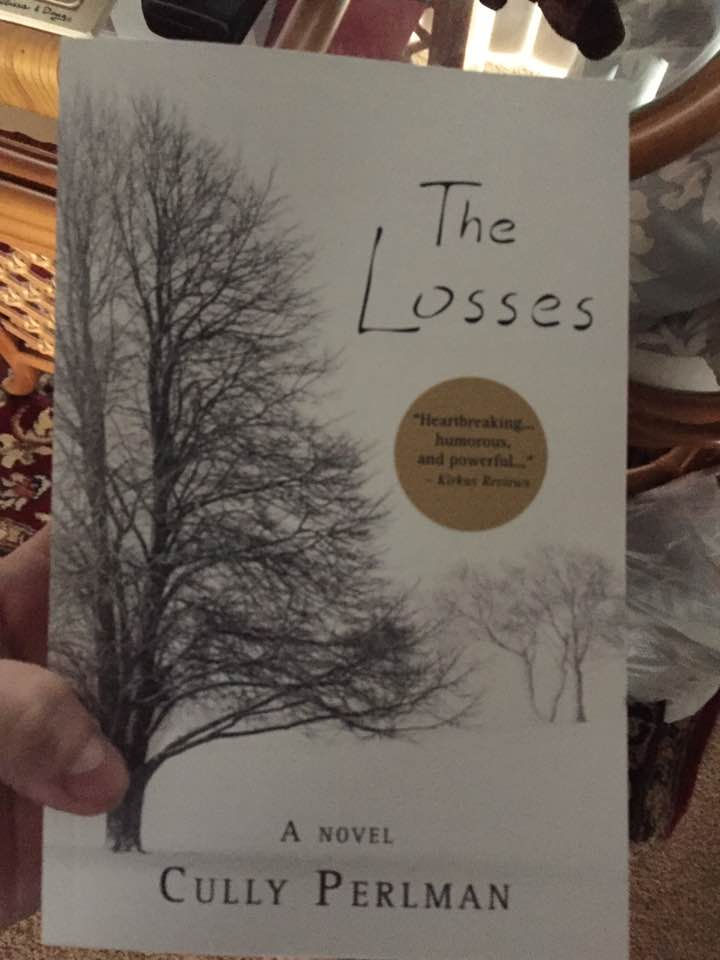
Cully Perlman is author of a novel, The Losses. He can be reached at Cully@novelmasterclass.com
*Any commissions from affiliates go to keeping this blog free.


I think you may have made a little typo that actually spans a wide gap. I personally don't like most literary fiction, which to me is a lot of interior "action" and very little exterior action. Although I note that books that win Nobels and National Book Awards actually have both, something a lot of lit fic authors seem to miss. But you used the term "literary writing." I don't know if it was by mistake or not, but there is lots of literary writing which is not litfic. Even the pulps produced some literary giants. So, yes, you can be a literary writer in any genre, not just litfic. And that may or may not be something to aim for.…